
Todd Blanche won the office of attorney general by one vote, and that razor-thin margin tells you almost everything about the fight behind it.
Quick Take
- The Senate confirmed Todd Blanche as attorney general in a 50-49 vote early Saturday morning.
- Senator Bill Cassidy gave Blanche the deciding Republican vote after days of uncertainty.
- Two Republicans, Susan Collins and Lisa Murkowski, voted no, while every Democrat opposed him.
- The confirmation came after Blanche cleared the Senate Judiciary Committee on a party-line vote.
A Pre-Dawn Vote With Big Stakes
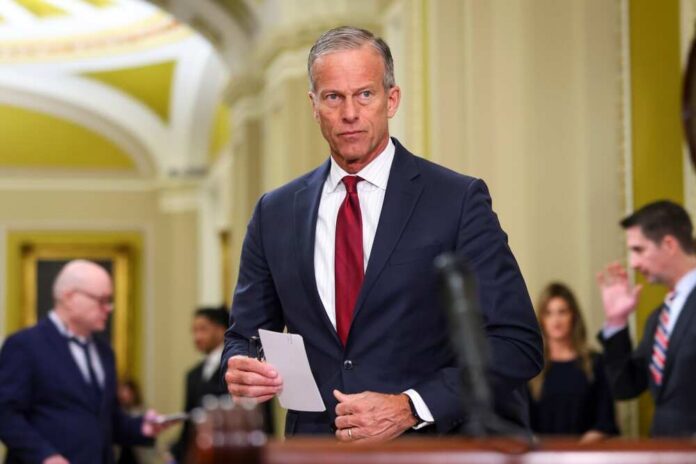
The Senate finished the job before sunrise, confirming Blanche as President Trump’s attorney general in an overnight vote that landed just after 4 a.m. The result was not close in tone, but it was close in math. Blanche became the second confirmed attorney general of Trump’s current term, and the vote showed how little room he had for error.
Senate confirms Todd Blanche as Trump's attorney general in 50-49 vote https://t.co/IoooB3Gk7p pic.twitter.com/bzUifL7HIt
— New York Post (@nypost) August 8, 2026
The final count mattered because it exposed the exact shape of the coalition behind him. Republicans could only lose two votes, and they lost two: Collins and Murkowski. Cassidy became the hinge point. Once he moved into the yes column, Blanche had enough support to clear the chamber.
How Blanche Survived the Senate
Blanche’s path to confirmation started with the Judiciary Committee, where Republicans advanced his nomination 12-10 along party lines. That step did not guarantee final approval, but it showed the majority was willing to push him to the floor. The committee vote also signaled something broader: the fight over Blanche was less about procedure than about trust.
That trust gap came from Blanche’s close ties to Trump and the role many senators believed he would play inside the Justice Department. Reuters described the vote as one of the most contentious cabinet fights of Trump’s second term. That description fits the moment.
The Senate was not merely filling a job. It was deciding how much independence the nation’s top law enforcement officer would have under a president who openly wants the department to move in his direction.
Why The Margin Mattered
A 50-49 vote leaves no fog around the result. It shows a nominee with real support, but no cushion. It also tells you that one senator’s shift changed the outcome. Cassidy’s decision mattered because it resolved Republican hesitation and prevented the nomination from collapsing under its own thin support. In a chamber this divided, one vote can feel like a whole storm system.
The late-night timing added to the drama, but it also blurred public attention. The vote came after an overnight session, when the Senate was already moving toward recess and the news cycle was crowded with other fights. That setting did not weaken the confirmation. It just made the political theater harder to separate from the paperwork.
SENATE CONFIRMS TODD BLANCHE AS U.S. ATTORNEY GENERAL
Acting Attorney General Todd Blanche will be sworn in later today as the actual United States Attorney General. The Senate confirmed the acting AG early Saturday morning after weeks of debate with a handful of Republicans in…
— Worldwide News Network (@WorldwideNNX) August 10, 2026
The media coverage around Blanche focused heavily on his independence, his past work for Trump, and the political consequences of handing him the Justice Department. That framing matters because attorney general confirmations are never just about credentials.
They are about whether the nominee can sit inside the president’s circle and still act like a referee. Blanche’s supporters said yes. His critics said no. The Senate, by a single vote, sided with the first camp.
One piece of primary evidence anchors the story even more firmly: Congress.gov shows Blanche’s earlier Justice Department nomination history in the congressional record, which helps establish the Senate’s documented role in his prior confirmation process.
For this latest vote, the public reporting is consistent across major outlets, and the result lines up cleanly with the chamber’s announced tally.
Sources:
apnews.com, axios.com, nbcnews.com, cnn.com