
Voters are pointing the finger at the White House for stubborn prices, and they want change now.
Story Snapshot
- Sixty-five percent say higher prices are due to President Trump’s policies, not outside forces.
- Only 26 percent approve of Trump’s handling of the economy, a new low in AP-NORC polling.
- Approval on cost of living drops to 17 percent, the weakest number in the survey.
- The poll used a national probability sample of 2,140 adults with a reported margin of error of 2.9 points.
A Public Fed Up With Prices, And With Washington
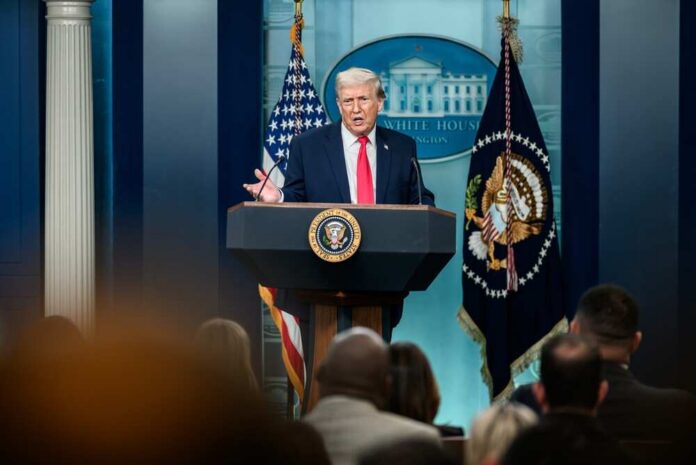
The Associated Press and the NORC Center for Public Affairs Research report that most adults blame President Trump’s policies for higher-than-usual prices. The survey, conducted September 24 to 28, 2026, finds 65 percent assign responsibility to policy rather than outside forces. These views land in a sour mood on the economy. Only 26 percent approve of Trump’s handling of it, the lowest mark the group has recorded for him. These numbers shape the political map heading into key contests.
Approval on the most personal metric is worse. Just 17 percent approve of how Trump handles the cost of living. That aligns with a broader sense of decline. More than half say the country, the national economy, and their local economy are worse since his reelection. Voters usually judge what they feel in their wallets. When groceries and gas cost more, they punish the person in charge. That pattern appears again here.
Methodology Anchors The Findings
The AP-NORC team used a probability-based national panel run by NORC at the University of Chicago. Researchers interviewed 2,140 adults online and by phone. The field period spanned five days in late September. The reported margin of sampling error is plus or minus 2.9 percentage points. That design supports general findings about the public mood. Like any survey, it measures attitudes, not direct economic causation. The headline result is about blame and job approval, which drive elections.
Partisanship shapes the blame story. While a majority overall point to Trump’s policies, about two-thirds of Republicans say factors outside the president’s control caused higher prices. That split matches today’s polarized media diet. Each side sees a different villain. Yet the national figure still matters. Elections turn on totals, not only on the base. When the middle complains about prices, the party in the White House pays the bill.
What The Numbers Mean For Power
Persistent price pain weakens any president’s standing. Researchers have long found that inflation and unemployment often move approval, though the link can vary across time and studies. Voters also tend to punish decline more than they reward gains. That asymmetry puts more weight on each month that prices feel high. The 26 percent economic approval number shows the cost of that pressure now. The 17 percent cost-of-living approval number shows where the pressure is hottest.
Campaigns will argue over causes. Some will cite tariffs, energy policy, and federal spending. Others will point to wars and supply shocks. The AP-NORC data do not settle that debate. They do show how people answer it at the ballot box. Most say policy choices failed to tame prices. That view has a simple political effect. It shrinks support for the president’s party and grows demand for change in Washington. Parties ignore that signal at their own risk.
The Conservative Read On Responsibility And Results
Personal responsibility and accountability sit at the core of American conservative values. When everyday costs keep rising, leaders must explain what they did, what worked, and what failed. The 65 percent figure says voters think policy mattered more than fate or far-off events. That belief pushes for a reset: less red tape, more domestic energy, stable money, and clear trade rules. Voters want results, not excuses. Elections reward whoever offers a plan that cuts prices fast.
One caution applies to any single poll. A snapshot captures a moment, and future data can shift the picture. But the shape of this moment is plain. Most Americans tie high prices to presidential choices. Approval on the economy has fallen to a low mark in this series. Approval on cost of living sits even lower. Those numbers, not the spin, will drive strategy in both parties as they chase the only verdict that counts: Election Day.
Sources:
apnorc.org, apnews.com, sciencedirect.com