

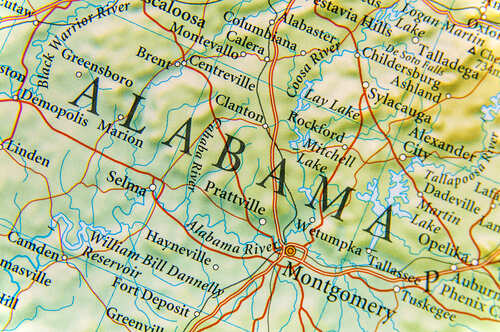
The Supreme Court just handed Alabama Republicans a major victory, allowing the state to use its GOP-favoring congressional map for this year’s elections — overriding a lower court that had declared the map intentionally discriminatory.
Story Snapshot
- The Supreme Court lifted a lower-court block and cleared Alabama to use its 2023 congressional map, which contains one majority-Black district, for upcoming elections.
- A federal three-judge panel had previously ruled the Republican-drawn map intentionally discriminated based on race and ordered a new remedial map with two largely Black districts.
- The case is part of a long-running redistricting battle rooted in the Supreme Court’s earlier Allen v. Milligan ruling, which found Alabama’s 2021 map likely violated the Voting Rights Act.
- Justice Sonia Sotomayor dissented sharply, signaling the left’s fury over the ruling, while conservatives celebrated it as a win for state legislative authority.
Supreme Court Steps In to Restore Alabama’s Map
The Supreme Court ruled that Alabama may use the congressional map its legislature enacted in 2023, which features one majority-Black congressional district, ahead of this year’s elections. The decision reversed a lower court’s order that would have required Alabama to adopt a new map containing two largely Black districts.
The high court’s intervention came as an emergency order, halting the lower court’s mandate before election deadlines forced the state to print ballots under a judicially imposed plan.
Emergency redistricting orders have become a recurring feature of election cycles, with courts and legislatures clashing over map validity under tight calendar deadlines.
The Supreme Court frequently steps in through interim orders to prevent court-drawn maps from displacing legislatively enacted ones, often without fully explaining the merits of the case. That dynamic played out again here, with the justices acting swiftly to preserve Alabama’s enacted map while litigation continues in the lower courts.
BREAKING — The U.S. Supreme Court allows Alabama to use the new 6R-1D congressional map for the midterm elections.
🔴 +1 GOP
🔵 -1 DEM pic.twitter.com/UZtpM9eeUN— VoteHub (@VoteHub) June 3, 2026
A Long-Running Legal Battle Over Voting Rights
The roots of this dispute stretch back to the Court’s Allen v. Milligan decision, which held that Alabama’s 2021 congressional map likely violated Section 2 of the Voting Rights Act of 1965 by packing too few Black voters into a single district.
Alabama’s legislature responded by passing a new map in 2023, but civil-rights plaintiffs argued that map still failed to create a second district where Black voters could meaningfully influence election outcomes. A federal three-judge panel agreed, blocked the 2023 map, and ordered yet another remedial redistricting process.
The three-judge panel found that Alabama’s Republican-controlled legislature “well knew” that a plan without an additional Black district would dilute Black Alabamians’ opportunity to participate in the political process, characterizing the map as intentionally discriminatory.
That finding formed the basis of the lower court’s order requiring a new map with two largely Black districts — the order the Supreme Court has now halted. The full merits of the case remain unresolved and will continue through the lower courts after the election.
State Authority vs. Judicial Redistricting
From a conservative standpoint, the Supreme Court’s action reinforces a core principle: elected state legislatures, not unelected federal judges, hold the primary authority to draw congressional maps. When courts substitute judicially crafted plans for those passed by legislatures, they bypass the democratic process entirely.
Alabama’s legislature enacted its 2023 map through the proper constitutional process, and the Supreme Court’s decision respects that authority while litigation over the map’s long-term legal status plays out.
The left’s outrage — including Justice Sotomayor’s sharp dissent — reflects a broader frustration that the current Supreme Court is unwilling to rubber-stamp expansive judicial intervention in state elections.
Critics framed the ruling as racially discriminatory, but supporters argue that drawing district lines based primarily on race is itself a constitutionally dubious practice. The debate over where the line falls between protecting voting rights and engaging in racial gerrymandering remains one of the most contested questions in American election law, and this case is far from its final chapter.
Sources:
[1] Web – BREAKING: Supreme Court Allows Alabama to Use Congressional Map that …
[2] YouTube – Supreme Court allows Alabama to use congressional map with one …
[3] YouTube – Alabama asks Supreme Court to allow use of congressional map …
[4] YouTube – Supreme Court rules on Alabama congressional map
[5] Web – Supreme Court halts order for Alabama to use US House map with 2 …
[6] YouTube – Supreme Court reinstates Alabama congressional map
[7] Web – What’s Happening with Alabama’s Redistricting Post-Milligan?
[8] YouTube – Supreme Court overturns 2023 ruling on congressional map in …