
The most eye-opening part of this story is how one violent night in the Strait of Hormuz instantly flipped Washington from “peace partner” to “oil shutoff enforcer,” without ever showing the public hard proof of what really happened.
Story Snapshot
- The United States revoked Iran’s oil sales waiver hours after three commercial tankers were attacked.
- Fresh U.S. airstrikes hit more than 80 targets in Iran as Central Command called the attacks “wholly unacceptable.”
- Iran denies responsibility and says Washington violated a performance-based peace agreement.
- The lack of publicly released forensic evidence leaves a gap between tough rhetoric and hard proof.
How a 60-day opening for Iran’s oil slammed shut in less than three weeks
The United States Treasury Department issued a sanctions waiver in late June that briefly reopened the door for Iranian oil to flow legally into world markets.
The waiver, tied to an interim memorandum of understanding with Tehran, allowed production, sale, and delivery of Iranian crude through August 21, giving Iran roughly sixty days to earn billions while talks over nuclear and regional issues inched forward. This was not a minor gesture. For four decades, American policy treated Iranian oil as something to choke off, not welcome.
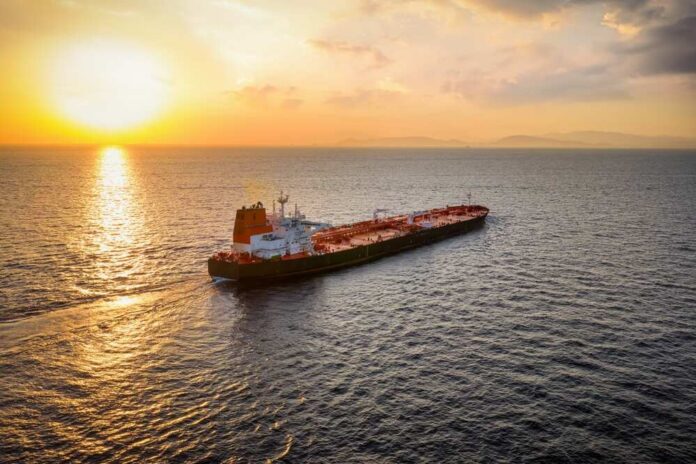
On July 7, that door slammed shut. After three tankers linked to Saudi Arabia and Qatar were attacked transiting the Strait of Hormuz, the Treasury Department’s Office of Foreign Assets Control revoked the license that had allowed new Iranian oil sales.
The new rule drew a bright red line: no fresh transactions for Iranian crude on or after July 7, with only a short grace period for deals already in motion. A U.S. official framed it bluntly, saying Iran would “only reap benefits if they exhibit good behavior.”
Strikes, shipping attacks, and a performance-based peace that broke
U.S. Central Command described the tanker attacks as “wholly unacceptable” and said American strikes were meant to impose heavy costs on those targeting commercial shipping in an international waterway.
More than eighty sites in Iran were hit in this new round of airstrikes, a major escalation for what had been billed as a fragile truce. The message was clear: Washington treated the tanker incidents not as random violence, but as a direct test of the memorandum of understanding that had unlocked the oil waiver.
From the administration’s perspective, the deal with Iran was performance-based from day one. That means every benefit Tehran enjoyed depended on how it behaved, especially in the Strait of Hormuz, where global crude flows through a narrow chokepoint.
Once tankers came under attack, officials argued that Iran had failed that test and forfeited its relief. For many, that logic lines up with common sense: if you want sanctions relief, you do not let, enable, or conduct attacks on civilian shipping.
Iran’s denial and the missing public evidence
Iranian officials tell a very different story. Tehran calls the waiver revocation and the strikes a violation of the memorandum of understanding, not a fair enforcement of it.
Iranian state media claims at least one attacked tanker had tried to use a United States-backed corridor through the Strait without coordinating with Iranian authorities, painting the incident as fallout from Washington’s attempt to control what Iran sees as its own waters. They categorically reject blame for the attacks and say unknown actors are trying to wreck Iran’s ties with the outside world.
US reinstates sanctions on Iranian oil sales after LNG, oil tanker attacks
WASHINGTON, July 7 (Reuters) – The United States on Tuesday re-imposed sanctions on Iranian oil, as a U.S. official warned that Iran's attacks on vessels in the Strait of Hormuz were "wholly… pic.twitter.com/7yixo2bstE
— Divine Oreoluwa (@Divine_Oreoluwa) July 8, 2026
The gap between the two narratives grows wider when you look for hard proof. Public reporting ties the United States response to intelligence assessments and timing, not to shared forensic data that the average citizen can see and judge.
There are no widely released missile fragments, radar plots, or satellite images that clearly trace the attack back to Iranian launchers in this latest case. That does not mean the evidence does not exist. It does mean the public is asked to trust classified material and official statements rather than examine the proof themselves.
Oil markets, leverage, and what this says about U.S. strategy
Oil prices jumped as traders digested two shocks at once: renewed strikes on Iran and the sudden end of legal Iranian crude sales. A waiver that some analysts already saw as a “huge concession” from America turned out to be highly conditional and short-lived.
This whiplash adds to a broader pattern. Over the past twenty years, Washington has often used sanctions waivers on Iran like dimmer switches, raising or lowering pressure after maritime incidents without fully declassifying the evidence behind its decisions.
The United States wields energy sanctions and military power to punish attacks on civilians and defend freedom of navigation. Iran’s leaders have a long record of threatening shipping and using force to gain leverage, so giving them a blank check would be naive.
At the same time, the lack of transparent proof in this episode leaves room for critics to argue that politics and leverage, not just facts, drove the choice to shut off the waiver so fast. That uncertainty is exactly what rattles markets and allies.
What evidence would finally close the credibility gap?
The fastest way to settle doubts would be sunlight. Declassified intelligence showing radar tracks, missile telemetry, or clear satellite images tying specific launchers in Iran to the damaged tankers would turn this dispute from “he said, she said” into a near-closed case.
Crew testimony from the Saudi and Qatari ships, forensic lab reports matching recovered weapon parts to known Iranian designs, or intercepted orders from Iranian commanders would all move the argument from trust to verification.
The larger lesson for readers is simple but uncomfortable. The modern United States playbook mixes force, sanctions, and limited economic favors in performance-based deals. Those deals can vanish overnight when violence erupts, especially in chokepoints like the Strait of Hormuz. That approach can align with common sense and deterrence.
Yet when Washington asks the country to accept major moves—bombing campaigns, oil shutoffs—without showing much of the evidence, it also asks for a lot of faith. In the long run, open proof is what keeps hard power credible.
Sources:
cnbc.com, thehill.com, bloomberg.com, en.wikipedia.org, wsj.com, instagram.com, facebook.com, nytimes.com