
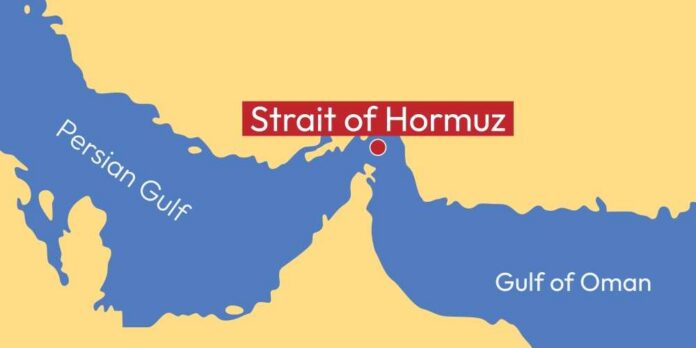
One blow in the Strait of Hormuz did not stay in the strait. It spread fast, turned political, and put the world’s most important oil lane at the center of a wider fight.
Quick Take
- The United States says it struck Iran after attacks on commercial vessels in the Strait of Hormuz.
- Tehran says the U.S. broke the ceasefire and answered with claims of its own.
- Both sides now frame control of the strait as a test of strength and legitimacy.
- The dispute has already cut ship traffic and raised the risk of more economic damage.
What Triggered the Latest Round
The latest escalation began after attacks on commercial shipping near the Strait of Hormuz, followed by U.S. strikes on Iranian targets.
U.S. Central Command said the attacks on Iranian military assets were a response to Iranian aggression against ships and a violation of the ceasefire. Reuters also reported that Washington treated the ship attack as the trigger for the strike package, while each side accused the other of breaking the truce.
US and Iranian forces exchanged heavy missile and drone assaults, with Tehran targeting US facilities in states across the Gulf and saying it had again closed the vital Strait of Hormuz, sending oil prices higher https://t.co/VDrfSYhSGd
— Reuters (@Reuters) July 13, 2026
President Donald Trump pushed the confrontation into the open by saying the United States was “reinstating” a blockade on Iran in the strait. He also said the U.S. would “control the straits” and that the operation would continue. That language matters because it moves the fight beyond punishment and into the deeper issue of who gets to decide access to a narrow waterway used by global commerce.
Why the Strait Matters So Much
The Strait of Hormuz is not just another patch of water. It is one of the world’s most sensitive shipping routes, and even short disruptions can shake oil markets and merchant traffic. The BBC reported that ship traffic through the strait fell sharply after the latest strikes, dropping from 41 ships to 7. That kind of decline shows why every new attack carries weight far beyond the Gulf.
The deeper contest is about leverage. Trump said other countries might have to pay for safe passage, which would break with the old U.S. promise of open navigation. That is a major shift in tone and in policy. For Iran, the strait offers a way to pressure the United States and its partners without needing to fight a conventional war. For Washington, keeping the lane open is both a military and political test.
Tehran’s Response and the Regional Spillover
Iran has not treated the U.S. strikes as a one-off event. Reports say Tehran retaliated across the Middle East after the American attacks, widening the conflict beyond the strait. That is what makes this crisis dangerous. A fight over tankers can quickly become a regional mess, with allied states, air defenses, and commercial traffic all pulled into the same spiral.
The public record also shows a sharp clash over blame. Iran has denied U.S. accusations in other tanker incidents and called them baseless.
At the same time, U.S. officials have repeatedly said Iranian forces were behind attacks on commercial vessels and that the strikes were meant to stop more interference with shipping. The result is a familiar standoff: two governments telling opposite stories, with the sea lanes caught in the middle.
The strongest point in the U.S. case is that its military and civilian leaders have tied the strikes to specific ship attacks and to freedom of navigation. The strongest point in Iran’s case is that it has rejected the allegations and accused Washington of violating the ceasefire first.
What is still missing in the public material is a neutral forensic record that settles every detail for outsiders. That gap leaves room for propaganda on both sides and keeps the crisis alive longer than it should.
What Happens Next
The next phase will likely hinge on whether either side can keep the strait open without another round of attacks. CBS News reported that U.S. officials described the ceasefire as performance-based and said the Iranian strikes on three tankers failed that test.
If that view holds, more strikes may follow. If Iran sees the blockade talk as an outright challenge to its sovereignty, it may keep answering in ways that raise the cost for everyone.
That is why this fight feels bigger than one shipping lane. The strait has become a stage where military force, trade pressure, and national pride all collide. The ships are the first things people notice. The real struggle is over who can claim control of the story, the water, and the future of the region.
Sources:
apnews.com, foxnews.com, youtube.com, dw.com, en.wikipedia.org