

President Trump signaled a major shift in health care by declaring he’d “rather not” extend Affordable Care Act subsidies—even as pressure mounts from both sides of the aisle.
Story Highlights
- Trump prefers direct aid to Americans over continuing Obamacare subsidies, aligning with conservative calls for smaller government.
- Extending ACA subsidies may be considered as a bargaining chip in ongoing health care negotiations.
- Republican lawmakers remain divided, with some expressing concern over any extension of policies linked to Obamacare.
- Democrats continue to demand subsidy extensions, using the issue to challenge Trump’s approach during the recent government shutdown.
Trump Signals Shift Away from Obamacare Subsidies
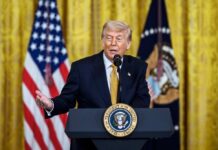
On November 25, 2025, President Trump publicly stated his opposition to extending Affordable Care Act (ACA) subsidies set to expire at the year’s end.
Trump emphasized his preference for giving money directly to Americans, empowering them to choose their own health care plans without government interference or handouts to insurance companies.
This stance echoes longstanding conservative principles: reduce bureaucratic overreach, restore individual choice, and stop funneling taxpayer funds to what many see as bloated, unaccountable insurance giants.
Trump says he’d ‘rather not’ extend Affordable Care Act subsidies https://t.co/woywZOHulL
— The Hill (@thehill) November 26, 2025
Direct Aid vs. Government Subsidies: The Conservative Case
Trump’s remarks outlined a plan to shift federal health care assistance away from insurance company subsidies and toward direct financial support for citizens. He stated, “Don’t give any money to the insurance companies, give it to the people directly. Let them buy their own health care plan.”
This approach resonates with grassroots conservatives frustrated by years of top-down mandates, administrative waste, and what they see as government picking winners and losers in the health sector.
Direct aid limits government involvement and upholds the principle of free-market choice—a priority for many who advocate for fiscal responsibility and limited federal power.
Bipartisan Tensions and Policy Uncertainty
While President Trump made clear he opposes a two-year extension of ACA subsidies, he acknowledged that a temporary extension could become necessary as part of broader health care negotiations with Congress.
Trump did not specify which Democrat lawmakers he was speaking with, leaving the door open to further debate and compromise.
Meanwhile, media reports suggest the administration might propose a short-term extension with stricter eligibility requirements, seeking to balance conservative priorities with the reality of divided government and ongoing legislative standoffs.
Republican Backlash and Democrat Pressure
Reports of a possible extension sparked immediate backlash from Republican lawmakers, many of whom have spent years fighting to dismantle the Affordable Care Act. These conservatives view any continuation of Obamacare-era subsidies as a betrayal of the movement to repeal and replace the law.
During the record-setting government shutdown in October 2025, Democrats pressed relentlessly for a subsidy extension, ultimately walking away without a guarantee but claiming they had put Republicans on defense.
The impasse highlights deep divides over the future of health care policy, with both sides using the issue to rally their respective bases and shape the national conversation.
Limited Data and the Path Forward
Details on the administration’s proposed health care reforms remain limited, with Trump declining to name specific legislative partners or provide a timeline for new policy initiatives. What is clear is the President’s continued commitment to dismantling the ACA’s legacy and returning power to individuals.
For conservatives, the debate over health care subsidies is emblematic of a broader struggle against big government, bloated spending, and policies that undermine personal liberty and responsibility.
As negotiations continue, Trump’s stance signals a continued fight to replace failed leftist policies with solutions rooted in constitutional values and fiscal discipline.