
President Trump’s upcoming trip to northeast Pennsylvania will test whether his economic agenda can cut through inflation anxiety and media spin to reassure frustrated working families.
Story Highlights
- Trump will visit northeast Pennsylvania on December 9, 2025, to promote his economic agenda amid voter anxiety over inflation and jobs.
- Polling shows many Americans still feel squeezed by prices and doubt that current policies are lowering their day-to-day costs.
- White House officials say Trump is working to reverse damage from Biden-era inflation, but acknowledge the administration must sharpen its message.
- Republicans fear economic frustration could threaten their fragile House majority in the upcoming midterm elections.
Trump’s Pennsylvania trip and voter economic anxiety
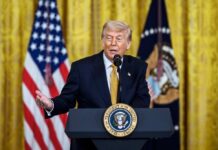
President Donald Trump is heading to northeast Pennsylvania on December 9, 2025, to promote his economic agenda at a time when many Americans remain deeply uneasy about inflation, interest rates, and a cooling job market.
The visit comes after an October NBC News survey found that nearly two-thirds of respondents believed Trump had not yet fulfilled his promises to lower costs and “supercharge” the economy. For many families, everyday expenses remain the clearest test of any president’s economic leadership.
White House officials frame the Pennsylvania trip as an effort to better connect Trump’s policies with the real-world struggles of households that feel squeezed at the grocery store, the gas pump, and in their mortgage or rent payments.
One senior official described the push as more about reinforcing the narrative than rolling out new policy, stressing that the administration has been focused on affordability “since Day 1.” That message targets voters who supported Trump to correct what they saw as Biden-era economic mismanagement.
President Donald Trump will visit an undisclosed location in Northeast Pennsylvania on Tuesday to talk about his administration's progress in boosting the economy. https://t.co/ZI9aT3d9fi
— WVIA (@WVIATVFM) December 4, 2025
Affordability, messaging gaps, and conservative concerns
Republicans in Congress increasingly worry that, unless visible relief from inflation and high borrowing costs materializes, their thin House majority could slip away in the next year’s midterm elections.
Strategists working with GOP campaigns say members regularly hear from constituents furious about shrinking purchasing power and an economy that feels stacked against savers, retirees, and small-business owners.
Those frustrations echo long-standing conservative concerns about deficit spending, regulation, and the lingering impact of Democrat-driven stimulus and entitlement expansions.
Inside the administration, aides highlight policies they argue are easing cost pressures, even as Trump has occasionally described the affordability “crisis” narrative as a political “con job” or “hoax” pushed by Democrats.
According to a senior official, that rhetoric is meant to argue that opponents are blaming Trump for problems rooted in their own past policies, not to deny that families are hurting.
For conservative voters, the key question is whether Washington is finally attacking the root causes: reckless federal spending, distorted energy markets, and regulatory burdens that drive up prices.
Policy moves on energy, regulation, and household costs
Trump’s recent pledge to roll back fuel efficiency standards illustrates how his team is trying to tie regulatory changes directly to pocketbook issues like car prices.
By easing mandates that push automakers toward expensive technology, the administration argues it can keep vehicles more affordable for working families who cannot absorb higher monthly payments.
For conservatives long skeptical of environmental rules crafted by unelected bureaucrats, this approach aligns with a broader push to restore consumer choice while reining in what they see as ideologically driven mandates.
White House aides also cite initiatives such as “baby bonds” and efforts to lower prescription drug prices as evidence that Trump is trying to help families build financial security and manage essential medical costs.
Supporters view these measures as attempts to correct distortions left behind by years of bipartisan neglect, soaring health-care prices, and complex insurance schemes.
However, without clear communication and visible savings on pharmacy bills or insurance premiums, many voters may not connect these policies to their lived experience, leaving political space for critics to define the narrative.
Democrat attacks, health care fights, and the midterm stakes
Democrats are already centering affordability in statewide races, as seen in recent gubernatorial contests in Virginia and New Jersey where candidates hammered cost-of-living themes.
Their campaign arms show no sign of relenting, arguing that Trump is not meeting the economic moment and warning that GOP health-care policies could exacerbate financial pain for millions.
With subsidies under the Affordable Care Act scheduled to expire at year’s end, Democrats are targeting vulnerable Republicans over the potential impact on premiums and coverage stability for middle-class families.
The Democrat Congressional Campaign Committee frames the situation as a looming “Republican health care crisis,” accusing so-called moderate Republicans of refusing to act and vowing to hold them accountable in the next election cycle.
For conservative voters, this fight revives familiar debates over Obamacare, government dependency, and Washington’s role in personal medical decisions.
The Pennsylvania trip thus becomes more than a single speech: it is an early test of whether Trump and congressional Republicans can convincingly argue that constitutional limits, market-based reforms, and energy freedom offer a better path out of the affordability squeeze than expanded bureaucratic control.