
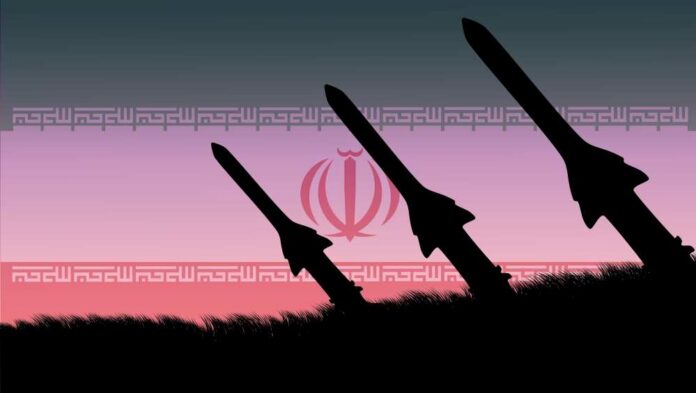
President Trump warned that 1,000 U.S. missiles are “locked and loaded” at Iran if Tehran tries to assassinate him, drawing a hard red line that signals zero tolerance for attacks on an American president.
Story Highlights
- Trump vowed to “decimate and destroy” Iran if the regime attempts to kill him.
- The warning cites intelligence and public threats tied to Iran’s leadership and supporters.
- Iran’s government issued blanket denials, but offered no proof to undercut specific claims.
- The Treasury Department moved on alleged Iranian financing networks amid the standoff.
Trump’s Deterrent Message and What Triggered It
President Trump posted that 1,000 missiles are aimed at the Islamic Republic of Iran, with “thousands more” to follow if Tehran acts on a threat to assassinate him.
The message said the United States military has standing orders to respond and “completely decimate and destroy all areas of Iran” if the regime targets him. The statement followed reports of chants about killing Trump and warnings tied to Iran’s hardline factions, pushing the White House to restate deterrence.
Trump threatens to 'decimate' Iran if it tries to kill him, as Treasury sanctions alleged Iranian financier https://t.co/gsTgxJ8bIX
— CNBC (@CNBC) July 11, 2026
Administration allies pointed to past Iranian vows of revenge after the 2020 strike that killed Qasem Soleimani, and to recent intelligence shared with the United States that alleged a new plot by Iran-linked actors to target Trump.
Media outlets summarized Trump’s language as a stark, time-specific warning meant to raise the cost of any attempt. The message framed the line as simple: any move to kill a U.S. president would invite massive military retaliation on a scale designed to end the threat swiftly.
Iran’s Denials and the Evidence Gap
Iran’s foreign minister publicly denied any plot to assassinate Trump and called for “confidence-building” with Washington, but did not address the pointed claims tied to specific threats, chants, or intelligence reports.
Earlier coverage documented Tehran’s blanket denials when similar charges surfaced in 2024, again without releasing evidence that rebuts particular allegations. The lack of a direct counter to the detailed threat narrative leaves an evidence gap that weakens Iran’s message and keeps pressure high on the regime’s credibility abroad.
United States reporting also noted that some denials came through state-linked outlets, which often avoid acknowledging covert plans or proxy activity. The take is straightforward: when a hostile regime with a long record of targeting Americans says “trust us,” it must show proof, not just words.
Absent proof, high-clarity deterrence can help prevent bloodshed. That is the core job of a commander in chief—defend American lives, project strength, and make the price of aggression unmistakable.
Treasury Actions and the Money Behind Threats
The United States Treasury Department took steps against an alleged Iranian financier tied to regime operations, signaling a whole-of-government approach that hits wallets while the Pentagon maintains readiness. Sanctions aim to disrupt payments to networks that recruit agents, procure weapons, or move funds for plots.
Cutting off cash flows is not flashy, but it is how you keep operators from buying planes, phones, and safehouses. Financial pressure works best when paired with clear military deterrence.
US President Donald Trump threatened to “completely destroy and eliminate” Iran if Tehran attempts to assassinate him. Simultaneously, the US Treasury Department announced sanctions against an individual alleged to be an Iranian financial manipulator.… pic.twitter.com/teZfr6xfJj
— Yulia (@YuliaXAUUSD) July 13, 2026
Americans have seen this movie before: rogue regimes test the line, then hide behind denials. Strong sanctions and a bright red line reduce that risk.
The Federal Bureau of Investigation, the Department of Homeland Security, and the intelligence community have chronicled years of Iranian threats and attempted hits on U.S. soil. The pattern explains why the administration is moving fast on financing and warning shots—peace comes from strength, not wishful thinking.
Why This Matters for Security, Energy, and the Constitution
American families feel these choices at the pump and in the grocery aisle. Escalation in the Gulf can send oil prices up. Clear deterrence helps keep sea lanes open and markets calmer.
A direct, public line also protects constitutional order. An attack on a sitting president is an attack on our system. The message to Tehran is simple and lawful: do not even think about it. If Iran wants relief, it can stop threats, stop financing terror, and prove it with actions, not posts.
What to Watch Next
Watch for further Treasury designations that target front companies and middlemen. Look for allied statements that echo the deterrent line. Keep an eye on any Iranian release of concrete evidence to back its denials—documents, intercepts, or audits.
If Iran cannot or will not provide that, expect Washington to tighten screws on money and movement while keeping ships, bombers, and missile forces ready. Strength now can prevent a wider war later—and keep Americans safe at home.
Sources:
cnbc.com, nypost.com, newscord.org, youtube.com, thehill.com