

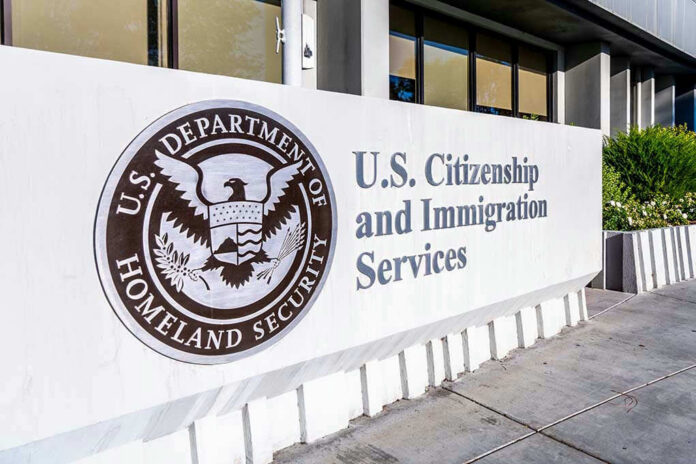
Washington is preparing the largest visa clean-up in U.S. history, and the trigger is asylum filed after entry on tourist and business visas.
At a Glance
- State Department planning rolling revocations tied to asylum filings by B1/B2 visitors.
- Officials floated a ceiling near 200,000 affected visas, making it the largest on record.
- Agency already revoked more than 175,000 visas this month under broader enforcement.
- Law grants wide discretion to revoke at any time; court fights over scope may follow.
What is being targeted and why it matters
State Department officials prepared to cancel up to 200,000 tourist and business visas for foreign nationals who applied for asylum after entering the United States. The plan, described as “rolling,” would notify holders that their visas are no longer valid for travel.
The government’s rationale is simple: these visas are for short stays. Filing for asylum after entry can show the traveler intended a different purpose, which undercuts the visa’s terms, according to reports based on internal documents and officials.
Trump admin to target 200,000 foreigners in largest mass visa revocation ever: report https://t.co/rOXCrkHDg3 pic.twitter.com/xf8G8B5PSW
— New York Post (@nypost) August 25, 2026
Spokespeople have framed the move as a clean-up of misuse, not a one-day sweep. A rolling process lets consular teams process files in waves and avoid blunt mistakes. That matters for accuracy and speed. Officials did not release a list of names or a public case file.
That silence gives critics room to suggest overreach, but it also follows normal practice for visa records, which are not public by default under long-standing rules.
The legal power behind mass revocations
Congress gave the Secretary of State and consular officers clear authority to revoke visas at any time. Federal law codified at Title 8 of the United States Code, section 1201(i), allows discretionary revocation.
The Congressional Research Service details that framework and confirms the breadth of the power, including discretionary grounds and the limited avenues for court review when revocation is not the sole basis for removal. That legal bedrock makes these actions lawful on their face, even at large scale.
Process details are found in agency manuals and the Code of Federal Regulations. The Government Accountability Office has described how revocations can start at the Secretary level, at a consular post, or via an immigration officer tip, and how notices move across systems so front-line officers can act.
The same Government Accountability Office also flagged gaps years ago and urged tighter procedures, evidence that revocation is a standard tool that still needs careful execution when used at speed.
Proof of precedent and the scale of current actions
The State Department has already announced more than 175,000 visa revocations this month for violations including fraud, threats to public safety, and national security risks. That scale shows operational muscle and a standing campaign to police visa abuse.
The planned asylum-linked push would add another large tranche on top, likely over the course of weeks or months. If the ceiling of 200,000 proves accurate, this would be the largest focused revocation effort tied to a single misuse pattern reported to date.
Trump is preparing the biggest mass visa revocation in U.S. history.
Up to 200,000 B1/B2 visas could be canceled, per AP.
Visitor visas are for temporary travel, and applicants must show they plan to leave. But asylum cases are individual. The plan covers visas issued from 2016… pic.twitter.com/v39JFbGd0j
— Kereal Sokolov (@sokolovkereal) August 25, 2026
Secretary of State Marco Rubio described the core test earlier this year: if officials would not have issued the visa had they known the information at the start, they should revoke it.
That “would we have said yes then?” standard aligns with views about rule clarity and fairness. It rewards candor, punishes bait-and-switch travel, and protects the integrity of short-stay categories without shutting the door on true refugees who follow the law.
The pushback and the likely court map
Advocacy groups and some litigants argue that mass actions can skip due process. They point to prior battles over student visa cancellations and a broader freeze on immigrant visas from 75 countries.
A federal judge recently struck down the freeze and told the government to revisit the cases, signaling judicial skepticism toward blanket policies without tight tailoring. Expect lawsuits to test whether this rollout includes real case-by-case review and adequate notice.
The strongest government defense is the statute’s plain language and its narrow purpose: to ensure a visa matches the trip. The weak spot is optics and execution.
If revocations flow only from a database flag that “asylum was filed,” without assessing status, timing, or lawful change of purpose, courts may balk.
If files show individualized review and clear notices, the program will likely stand. The difference between those two paths is discipline, documentation, and speed.
What to watch next
Watch for formal State Department guidance that defines which filings trigger review, how soon notices go out, and how holders can seek reconsideration. Track whether the Department distinguishes between people who overstayed and those who filed while still in status.
Follow whether the “rolling” design ramps in waves and trims obvious false positives. Those signals will tell you if the largest revocation in history becomes a model of targeted enforcement or a cautionary tale in court.
Sources:
redstate.com, thehill.com, theguardian.com, state.gov, myattorneyusa.com, congress.gov, community.lawschool.cornell.edu