

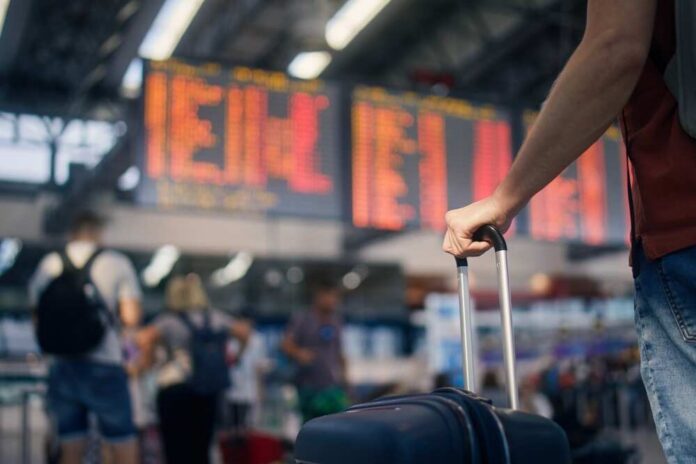
Washington’s latest shutdown drama is forcing tens of thousands of TSA officers to protect America’s airports while their paychecks are put on ice.
Quick Take
- A DHS-only shutdown began at midnight Friday, Feb. 13, 2026, after Congress failed to pass new funding.
- About 61,000 TSA officers—roughly 95% of the workforce—are required to keep screening travelers without pay.
- Travel industry groups warn of longer lines, delayed flights, and rising absenteeism as the shutdown drags on.
- Democrats are tying DHS funding to new restrictions on immigration enforcement operations following a January shooting incident.
- Air traffic controllers are funded through Sept. 30, 2026, so disruption is expected to show up first as screening delays—not immediate nationwide cancellations.
TSA is “essential,” but pay is optional in a shutdown
The partial shutdown hit the Department of Homeland Security starting early Saturday, Feb. 14, after funding expired at midnight Friday. TSA screening did not stop because DHS contingency plans classify about 95% of TSA’s workforce as essential, requiring roughly 61,000 officers to report for duty without pay.
That setup keeps checkpoints staffed in the near term, but it also strains morale and household budgets for workers who can’t legally refuse the assignment.
The shutdown’s scope matters. The Federal Aviation Administration and air traffic controllers are funded through Sept. 30, 2026, which reduces the odds of immediate flight cancellations driven by staffing failures in the control tower.
Instead, the early pressure point is the checkpoint: bag screening, pat-downs, and staffing levels that determine how fast travelers move. If lines grow, airlines may hold departures for late passengers, creating ripple effects across airport schedules.
Congress left town as airports head into peak travel weeks
Lawmakers departed Washington for a scheduled 10-day break without a DHS funding deal, while indicating they could return if talks progress. That timing collides with February vacation week in parts of the country and the approach of spring break travel, when passenger volumes rise at hundreds of U.S. airports.
Early reporting described increased activity in Boston’s Logan Airport as families began moving through terminals under the new shutdown conditions.
Travel industry groups have warned that shutdown math turns ugly over time. Screening can continue for days even with unpaid workers, but the risk grows as bills come due and workers burn through savings.
Industry warnings have focused on a predictable chain reaction: more absenteeism, slower lines, missed flights, and knock-on delays that affect not only leisure travel but business trips, cargo timing, and hotel and tourism revenue in destination cities.
No clear path to ending the partial government shutdown as lawmakers dig in over DHS oversighthttps://t.co/rGtPT8s6B1 pic.twitter.com/lsLpS6UB9l
— The Washington Times (@WashTimes) February 15, 2026
Immigration enforcement conditions are now the bargaining chip
The central dispute is not about whether TSA should screen passengers; it is about whether DHS funding should be conditioned on new restrictions for immigration enforcement operations.
Reporting describes Democrats blocking DHS funding until additional limits are imposed on immigration agents, including proposals tied to oversight measures following a fatal January shooting in Minneapolis involving two people, Alex Pretti and Renee Good. Republicans and the White House have opposed fully adopting those demands as written.
President Trump has said negotiations continue and has framed the talks around protecting law enforcement agencies such as ICE and Border Patrol while remaining open to discussions. That posture highlights a core reality of shutdown politics: essential workers become leverage.
TSA officers, Coast Guard personnel, and other DHS staff carry on the mission while elected officials use the deadline to press policy priorities—leaving families at home to manage the immediate consequences of “must work, won’t be paid” federal service.
What to watch next: pay dates, absenteeism, and security throughput
Operational impacts tend to build, not explode overnight. Experts have noted that the 2025 shutdown experience is fresh in the system, which could accelerate strain if workers anticipate a long standoff.
One practical marker is payroll timing. Reporting indicates TSA paychecks due March 3, 2026 could be reduced, and a full missed paycheck could hit by March 17 if funding remains stalled. That is when financial pressure can translate into higher call-outs and slower checkpoint throughput.
TSA agents are working without pay at U.S. airports due to another partial government shutdown. Sad but the democrats don’t care at all. https://t.co/zNmyu90YNk
— fred gotit (@gotit_fred) February 15, 2026
For travelers, the near-term guidance is straightforward: expect longer lines, arrive earlier than usual, and avoid prohibited items that slow screening. For the country, the larger concern is how casually Washington normalizes using national security agencies as negotiating collateral.
DHS handles border security, aviation screening, cybersecurity functions, and disaster response. Even a “partial” shutdown can become a full-spectrum stress test when personnel are treated as essential to work—but not essential enough to pay on time.
Sources:
https://simpleflying.com/not-again-tsa-officers-unpaid-shutdown-spring-break/
https://www.foxnews.com/politics/heres-how-dhs-shutdown-could-impact-lives-everyday-americans