

One ruptured chemical tank turned a routine shift at a Washington paper mill into a lethal test of industrial safety—and an object lesson in how official calm can coexist with unanswered questions.
Story Snapshot
- Officials said the scene was stable with no immediate public threat while recovery and assessments continued [2].
- Authorities confirmed deaths and multiple injuries after a white-liquor tank ruptured at the Longview mill [5].
- The cause remained unknown, and investigators began hazardous-materials and structural evaluations [5].
- Hospitals and responders treated the injured as families awaited word on those unaccounted for [5].
Officials promised stability; the facts demanded scrutiny
Fire leaders in Longview told residents the industrial scene was stable and that recovery operations were underway, emphasizing no immediate threat to the surrounding community while hazardous-materials teams and structural experts worked the site [2].
That message fits the playbook for emergency risk communication: control the perimeter, slow the rumor mill, and protect the public from secondary harm. Families, however, heard a harsher reality—casualties confirmed, others missing, and a complex chemical process under the microscope [5].
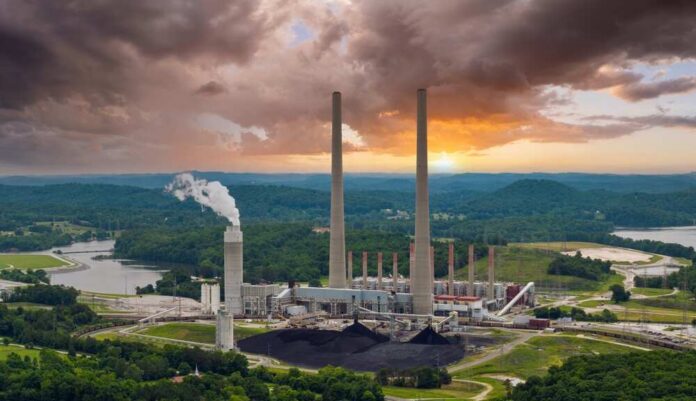
Authorities described a white-liquor tank as the failed vessel at the Nippon Dynawave Packaging mill, a pulp-making workhorse that holds a corrosive mixture used to digest wood chips [5].
Reporters relayed that the large tank held thousands of gallons and had partially filled status at the time of the rupture, information investigators will use to test theories about integrity, corrosion, vacuum formation, and relief protection [5]. The combination of chemical hazard, vessel size, and heat-and-flow dynamics makes this a classic process-safety investigation.
The casualty picture forced sober accounting
Officials confirmed multiple injuries and at least one death as hospitals received patients from the scene, including a responding firefighter among the injured [1][5]. Medical centers reported critical cases while responders coordinated transfers and continued search efforts for those unaccounted for [5]. This pattern—assurance of a stable scene paired with severe harm—should focus attention on whether safeguards failed inside the process, not just whether the surrounding community faced an off-site plume.
Several employees are still missing after a chemical tank ruptured at a facility in Washington state, leaving multiple people critically injured and at least one person dead, authorities said. pic.twitter.com/brUptNe1HN
— Breaking911 (@Breaking911) May 27, 2026
Emergency leaders reiterated that the response had moved into recovery and technical assessment phases, with investigations into the cause still pending [2][5]. That timeline matters. Until metallurgical analysis, thickness readings, valve and relief-device inspections, and control-system logs are reviewed, any confident claim about fault or inevitability is premature.
What investigators will look for—and why it matters
Process-safety teams will seek a precise failure mode: internal vacuum from rapid condensation, corrosion thinning, weld cracking, operator error during fill or wash cycles, blocked vents, or relief system inadequacy. They will request inspection histories, non-destructive thickness tests, repair orders, alarm logs, and maintenance deferrals tied to the specific tank.
Regulators such as the Occupational Safety and Health Administration and state labor authorities will compare practices against required hazard analyses and mechanical integrity standards [5]. Clear, documentable mechanisms—rather than speculation—must anchor any judgment.
🚨 Corrosive chemical tank implodes at Nippon Dynawave paper mill in Longview, Washington
1 worker killed, around 10 injured & 9 missing after massive white liquor tank rupture at pulp facility
Victims suffered chemical burns & injuries#عيد_الأضحى #ドラクエ診断 #플레이브 pic.twitter.com/Xl9crm8ejH
— Daily Briefs (@Daily_Briefs_) May 27, 2026
Public officials asserted no immediate off-site threat, which can be true while an on-site failure still exposes workers to deadly risk [2][5]. That distinction should guide public expectations. Community air sampling and perimeter monitoring answer one question. Tank integrity and operating discipline answer another. Citizens deserve both answers. Common sense says you do not accept generic assurances where hard records—inspection data, test results, and corrective-action timelines—should speak.
Where prudence and transparency should lead now
Authorities owe families and the public a complete chronology: operating conditions hours before the rupture, alarm history, maintenance status, and the exact state of vents and relief devices. Hospitals and responders did their duty under pressure; now management and regulators must do theirs with documents.
Early briefings framed the scene as controlled, and that may have prevented panic [2]. The next phase requires the humility to publish the mechanical truth—even if it shows an avoidable lapse—so that every similar tank in every similar mill gets fixed before another crew clocks in [5].
Sources:
[1] Web – Deaths reported after tank implodes at Washington pulp and paper mill
[2] YouTube – Officials give update on deadly Longview chemical explosion
[5] Web – Deaths reported after chemical tank implodes at pulp and paper mill …