

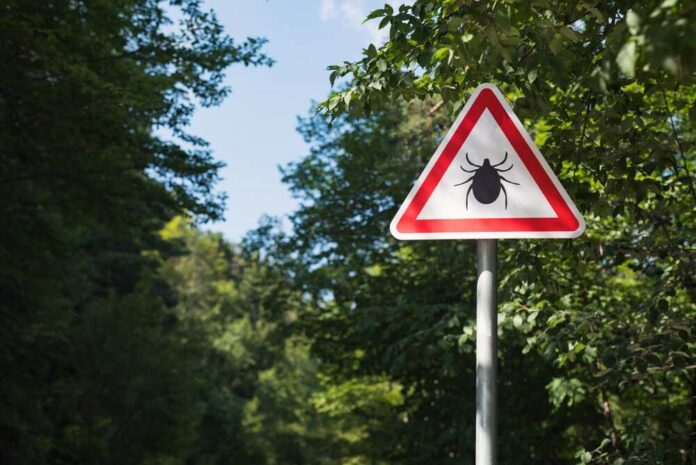
Tick season is not just annoying this year; the early numbers suggest it is hitting emergency rooms harder than usual, especially in the Northeast.
Quick Take
- CDC data shows weekly emergency room visits for tick bites reached 71 per 100,000 in April 2026, more than double the usual level for that time of year.
- The CDC says most regions, except the South Central United States, had their highest weekly rates for this point in the season since 2017.
- Reports from ABC News and Axios say the Northeast is seeing the sharpest surge, with the CDC data pointing to a strong early-season spike.
- The CDC’s 2026 data are preliminary, so the current picture is real but not final.
What the Numbers Show
The clearest fact is simple: tick bites are sending more people to the emergency room than normal, and the jump is big enough to draw national attention. In April 2026, the rate reached 71 visits per 100,000 emergency room visits, compared with an average of about 30 for that time of year. The CDC says this is the highest weekly rate for this point in the season since 2017 in all regions except the South Central United States.
The Northeast stands out most sharply. ABC News reported that the region had the highest rates, and CDC-linked coverage pointed to a steep month-to-month increase there. That fits the longer pattern described in earlier CDC research, which found that tick-bite emergency visits often peak in spring and early summer, with the Northeast consistently carrying the heaviest load. That regional pattern matters because it helps explain why one part of the country can feel like it is in a crisis while another sees far less pressure.
Why Health Experts Are Paying Attention
Tick bites are not just a nuisance. They can lead to Lyme disease and other infections, and CDC estimates say about 31 million people in the United States are bitten by a tick each year. Healthline notes that growing tick populations are part of the problem, and ABC News reported that doctors are seeing unusually strong early-season activity. That makes the emergency room data more than a seasonal weather story; it is also a warning sign for infection risk later in the summer.
Tick season is expected to be worse than normal as ER visits rise in much of the U.S. https://t.co/EH7dln8g2E
— CBS News (@CBSNews) July 3, 2026
Context matters here. The CDC has labeled the 2026 numbers as preliminary, which means they can change as more complete data comes in. ABC News also noted that it is still unclear whether the rise will keep climbing through May, the month that usually brings the biggest seasonal peak. That is the key reason the smartest reading is cautious: the surge is real, but the full season has not finished telling its story.
What May Be Driving the Surge
Experts quoted in coverage point to the same broad forces again and again. Milder winters can help more ticks survive, and a longer warm season gives them more time to spread. CDC-linked reporting also notes that increased awareness may be sending more people to the emergency room earlier, before bites get worse. Those two forces can move together, which makes the spike harder to read at first glance.
Still, the public should not confuse caution with denial. The best available evidence says tick-related emergency visits are higher than normal, and that the Northeast is taking the hardest hit. At the same time, the data do not prove that 2026 will end up as the worst season on record, because the CDC figures are still preliminary and the seasonal peak has not fully passed. That is the tension in the story: a real surge now, but no final verdict yet.
What This Means for Families
For ordinary people, the lesson is practical. Ticks are active now, and the risk is not limited to deep woods or long hikes. The CDC recommends avoiding brushy areas, using approved repellent, treating clothing with permethrin, and checking the body after time outdoors. Those steps sound basic because they are basic, but basic works when the threat is small, mobile, and easy to miss.
There is also a common-sense side to the public reaction. When a health warning gets amplified quickly, people can jump to the biggest possible conclusion before the season is over. The data do justify attention, but they also reward restraint. The public should watch the CDC’s tracker, not the headlines alone, because the tracker is the only source here with the power to turn a noisy early signal into a final seasonal answer.
Sources:
cbsnews.com, tickmitt.com, cdc.gov, abcnews.com, publications.aap.org, washingtonpost.com, facebook.com, restoredcdc.org, foxnews.com, healthline.com, unmc.edu