

Cracker Barrel just proved that one “modern” logo can topple a chief executive faster than a bad biscuit.
Story Snapshot
- Cracker Barrel CEO Julie Masino will step down as chief executive and board member on August 10 after a year of fierce backlash to a rebrand.
- The redesign stripped away the folksy logo and vintage decor in the name of “modernization,” but loyal customers saw it as erasing Americana identity.
- Shareholders spared Masino in a 2025 vote, then the company walked back much of her $700 million brand overhaul before announcing new leadership.
- Veteran restaurant executive David Deno will take over, signaling a reset toward stability and, likely, a more traditional brand vision.
How a modernization push ended in a leadership shake-up
Cracker Barrel announced that Chief Executive Officer Julie Masino will step down as CEO and as a member of the board, effective August 10. The company said she will stay on until October 9 in an advisory role to help with the handoff to incoming CEO David Deno.
That transition ends a roughly three-year run in which Masino tried to transform the down-home chain into a sleeker, more modern brand while battling heavy criticism from customers and conservative voices.
NEW: Cracker Barrel CEO Julie Felss Masino is stepping down following the company's controversial rebrand last year that sparked fierce backlash from longtime customers.
The effort to modernize the chain included removing the iconic Uncle Herschel mascot and redesigning… pic.twitter.com/gE1U5HboJx
— FOX Business (@FoxBusiness) July 27, 2026
Masino framed her strategy as a needed refresh for a 660-restaurant chain competing for younger, more urban diners in a crowded sit-down market. Her plan reached deep into Cracker Barrel’s identity: a simplified logo, updated store designs, fewer antique signs and collectibles on the walls, and menu changes meant to feel lighter and more contemporary.
On paper, that is textbook corporate playbook: modernize the brand, chase new customers, and show Wall Street a growth story beyond nostalgic comfort food.
What the rebrand changed and why customers revolted
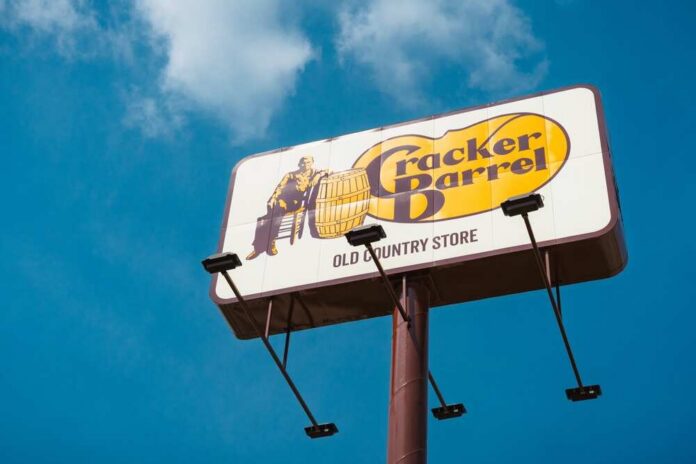
The flashpoint was the logo. In August 2025, Cracker Barrel rolled out a modernized mark that dropped the familiar “Old Timer” figure leaning on a barrel and narrowed the branding to a cleaner word design.
The logo launch came with remodeled interiors that removed much of the cluttered, country-store charm and replaced it with a more streamlined look.
For longtime guests, this did not feel like a tune-up. It felt like someone had taken a power washer to decades of Americana and scrubbed away the soul.
Customers and commentators quickly branded the move “woke,” tying the changes to diversity and inclusion trends and broader culture-war frustration. Social media lit up with side-by-side photos of the old and new logo and photos of stripped-down dining rooms.
Many posts accused the company of shaming rural heritage and chasing city elites. For a chain that built its fortune on road-trip nostalgia and small-town themes, that narrative was poison. Within days, Cracker Barrel reversed the logo shift at many locations and paused further rollouts.
Shareholder pressure, political heat, and a costly course correction
The market reacted almost as fast as the customers. One top shareholder warned that the rebrand was destroying value, after the logo launch helped trigger a double-digit stock drop and hundreds of millions in lost market capitalization.
Activist investor Sardar Biglari mounted a noisy campaign to oust Masino and another board member he tied to the branding push, arguing the company had betrayed its base.
Shareholders eventually voted to remove diversity marketing executive Gilbert Dávila but kept Masino, sending a mixed message of anger and grudging patience.
Masino later told interviewers she felt “fired by America” after the backlash, even though she technically kept her job. She insisted the redesign was not ideological, saying the logo was only one piece of a larger effort to freshen the brand while staying true to its roots. The problem was not just what she said, but what people saw.
Guests walked into stripped-back dining rooms and saw a chain turning its back on country-store charm. Many conservatives, already wary of corporate virtue signaling, saw one more company lecturing them on “progress” while spending their money.
What Masino’s exit means for brand identity and consumers
Cracker Barrel’s board now presents Masino’s departure as the result of a planned search and succession process, not a sudden firing. But the timeline tells a clearer story.
The redesign sparked outrage in summer 2025, the company reversed course by fall, shareholders delivered a warning vote in November, and less than a year later the architect of the overhaul is on her way out. For a traditional, family-oriented brand, that looks like a delayed but firm verdict: modernization is fine; erasing heritage is not.
The CEO of Cracker Barrel, Julie Masino, is stepping down after the company’s DISASTROUS woke rebrand that faced MASSIVE backlash.
Fox & Friends: “David Deno is expected to take over next month. He previously served as CEO of Bloomin’ Brands, which does own Outback Steakhouse.” pic.twitter.com/gMEk8kqIGw
— RedWave Press (@RedWavePress) July 28, 2026
Masino’s big mistake was simple. She treated Cracker Barrel’s core identity as something to sand down instead of something to protect and build around. Business leaders talk a lot about “future customers,” but the guests who kept this chain alive for decades did not ask for a lifestyle pivot.
When those people feel mocked or replaced, they do not quietly adapt. They walk, they post, they vote their shares, and, eventually, the chief executive walks too.
Sources:
thegatewaypundit.com, theglobeandmail.com, pjmedia.com, wsj.com, abcnews.com, finance.yahoo.com, foxbusiness.com, apnews.com, youtube.com, people.com, newsweek.com, tennessean.com, marketwatch.com, independent.co.uk, nypost.com