
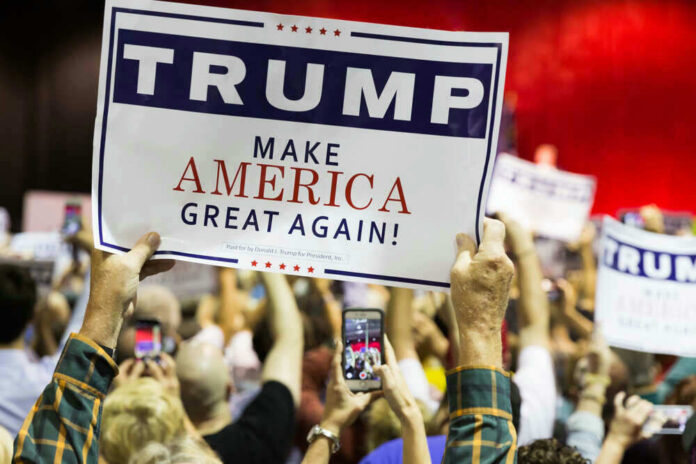
President Donald Trump’s push to swap America’s 250th-anniversary concerts for a massive Make America Great Again rally turns a birthday party for the nation into a fight over who owns the word “patriotism.”
Story Snapshot
- Trump publicly floated canceling semiquincentennial concerts after artists bailed and replacing them with a Make America Great Again rally.
- The same anniversary is also wrapped in a sweeping “Freedom 250” agenda of fairs, games, prayer rallies, and Trump-fronted spectacle.
- The clash exposes a deeper question: is July 4, 2026, a national commemoration or a personalized Trump show?
- Conservatives face a strategic choice between broad, unifying patriotic culture and a purer, base-first political celebration.
How a Birthday Concert Turned Into a Rally Test Case
Trump did not just grumble about celebrity cancellations; he told the country he was “working to hold a rally instead” after several artists pulled out of the Great American State Fair concert tied to the 250th anniversary.[1] He blasted “overpriced singers, who nobody wants to hear,” and offered a “giant Make America Great Again rally” as the replacement centerpiece.[1]
Japan Today reported the same move plainly: Trump called for canceling the concerts and replacing them with a Make America Great Again rally.[3] The message was crystal clear—if pop acts will not help celebrate, Trump will.
President Trump floats scrapping America's 250th anniversary concert for a massive MAGA rally after multiple artists pull out of the Great American State Fair lineup. Freedom 250 organizers later confirmed the president will personally kick off the celebration with an opening… pic.twitter.com/omudkAINvl
— Fox News (@FoxNews) May 31, 2026
Americans should see the tactical logic. A Trump rally is a known quantity: huge crowds, direct messaging, no risk of a headliner denouncing the event from the stage. After entertainers backed out amid complaints the fair was “too political,” a Trump-led rally effectively flips the script. Instead of begging celebrities for legitimacy, Trump signals that the movement itself is the show. That aligns with his long-standing instinct: when establishment culture walks out, double down on the base that never left.
Freedom 250: National Commemoration Or Trump Pageant?
The rally proposal does not exist in a vacuum; it sits inside an ambitious “Freedom 250” program that Trump describes as “the greatest birthday celebration our country has ever seen.”[3]
His official address lays out an entire patriotic universe: a Great American State Fair on the National Mall, “Patriot Games” competitions, a national prayer event, a mixed-martial-arts fight at the White House, and a public‑private venture branded “Freedom 250.”[3] This is a leader-centered narrative, designed and narrated by Trump himself as the storyteller-in-chief of America’s 250 years.
Critics see something darker in that scale and personalization. The New Republic characterizes Freedom 250 as soaked in Christian nationalist messaging, heavy corporate sponsorship, and donor‑friendly spectacle.[1] That outlet warns the program blurs lines between public commemoration and political cult, especially when the first big marquee event is a Trump-headlined rally on the National Mall.[1][3]
Whether one agrees with that language or not, the charge points to a real tension: when the sponsor, the star, and the country’s story are all the same man, it becomes harder to claim a neutral national ceremony.
What The Concert Meltdown Reveals About Celebrity Power
The concert controversy began the usual way: once politics entered the picture, entertainers sprinted for the exits. Martina McBride, Bret Michaels, and others backed out, with several citing concern the fair would be too political. CBS News reported that many artists canceled after the event acquired an overtly Trump‑aligned identity, not a generic “America 250” banner. For cultural elites, performing under a Freedom 250 logo funded and framed by Trump world looked like tacit endorsement of his entire agenda.
From a common‑sense standpoint, the exodus is clarifying. These performers are happy to take America’s money every July 4, but the minute patriotism shares a stage with unapologetic nationalism, they suddenly discover their conscience. That does not make them villains, but it reveals how thoroughly the entertainment class polices acceptable patriotism. Their message is unmistakable: they will sing about America, as long as they get to define what America means—and who is allowed to speak for it.
Rally Versus Concert: Two Competing Definitions Of Patriotism
Trump’s proposal sharpens the choice. A concert with a diverse lineup lets planners present the 250th as a shared civic birthday party, with politics in the background. A Make America Great Again rally centers politics openly and unapologetically. Japan Today’s framing that Trump wants the concerts canceled and replaced with a rally is not some media exaggeration; it matches what he said and posted.[1][3] That switch tells you which version of patriotism he thinks matters most right now: energized, partisan, and combative.
Whether that move aligns with American values depends on what one thinks the country needs at 250. If the priority is national cohesion, then a multi‑genre, multi‑voice concert—however annoying the performers—better reflects a people bigger than any politician.
If the priority is rescuing patriotism from a cultural class that treats it as a costume, then a Trump‑led rally that sidelines “third‑rate artists” and puts regular Americans on the Mall looks like overdue correction.[1] The uncomfortable truth is that both instincts live inside the right, and this semiquincentennial fight forces a choice.
Sources:
[1] Web – Trump calls for replacing US 250th concerts with MAGA rally
[3] Web – The Great American State Fair Meltdown, Explained – Washingtonian