
America faces its largest measles outbreak in a decade, with over 1,491 confirmed cases nationwide and three deaths.
Story Overview
- The Southwestern border regions of Utah and Arizona emerge as the epicenter of the nationwide measles crisis.
- CDC reports 1,491 confirmed cases across 38 outbreaks, marking the first measles deaths since 2015.
- Outbreak spreads through unvaccinated populations, particularly affecting religious communities.
- Public health authorities deploy wastewater surveillance and emergency vaccination campaigns.
Border Communities Bear the Brunt
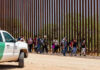
The measles outbreak has hit hardest along the Utah-Arizona border, where 36 confirmed resident cases in Utah alone represent just the tip of the iceberg.
Wastewater testing reveals the virus circulating far beyond confirmed cases, indicating widespread community transmission that health officials are still working to contain.
The outbreak began when infected travelers passed through public locations in southwestern Utah in May and June, exposing countless residents to a disease that was declared eliminated in America over two decades ago.
Utah’s Department of Health and Human Services continues to issue exposure notifications for public locations, but the damage appears to be extensive.
The virus has found fertile ground in communities with lower vaccination rates, spreading rapidly through populations that previous administrations failed to protect through sound public health policies. This represents a stunning reversal of America’s measles elimination status achieved in 2000.
National Crisis Emerges from Failed Policies
The CDC’s September data reveals the scope of this public health emergency: 1,491 confirmed cases with 86% classified as outbreak-associated, meaning person-to-person transmission rather than isolated travel cases.
Three Americans have died from measles in 2025, all unvaccinated individuals whose deaths could have been prevented with proper vaccination coverage.
The outbreak originated in Ontario, Canada, before spreading to Texas in January and rapidly expanding across the Southwest through unvaccinated populations.
What makes this crisis particularly concerning is how it began and spread.
International travelers introduced the virus to Texas communities with insufficient vaccination coverage, then the disease hopscotched through religious communities, including Mennonite populations, reaching New Mexico, Oklahoma, Kansas, and even Chihuahua, Mexico.
The cross-border nature of this outbreak underscores how porous borders and inadequate health screening policies can threaten American families.
Public Health Infrastructure Under Strain
Local health districts are implementing emergency measures, including contact tracing, vaccination clinics, and innovative wastewater surveillance, to track community spread.
However, these reactive measures highlight the failure of previous administrations to maintain the vaccination coverage necessary to prevent such outbreaks. The current response, while comprehensive, represents taxpayer dollars spent on crisis management rather than prevention.
The outbreak has strained healthcare resources across multiple states, with hospitals dealing with complications from a disease that should be relegated to medical textbooks.
Rural and semi-rural areas with lower vaccination rates have borne the heaviest burden, exposing vulnerabilities in America’s public health infrastructure that developed under policies prioritizing political correctness over practical disease prevention.
Community Resistance and Government Response
Public health authorities face significant challenges in communities where vaccine hesitancy runs deep, often rooted in legitimate concerns about government overreach and medical autonomy.
Some community leaders express valid concerns about heavy-handed public health interventions, while others recognize the need to protect their members from preventable disease.
The tension reflects broader American concerns about individual liberty versus collective public health measures.
In my opinion, this outbreak demonstrates what happens when public health policy becomes politicized rather than focusing on proven medical interventions.
The Trump administration now inherits a crisis that could have been prevented through consistent, apolitical promotion of childhood vaccination—an intervention with decades of safety data and proven effectiveness.
The challenge lies in rebuilding trust with communities that may have lost confidence in government health recommendations after years of inconsistent messaging on various health issues.
Sources:
Utah Department of Health and Human Services – Measles Response
2025 Southwest United States measles outbreak – Wikipedia