

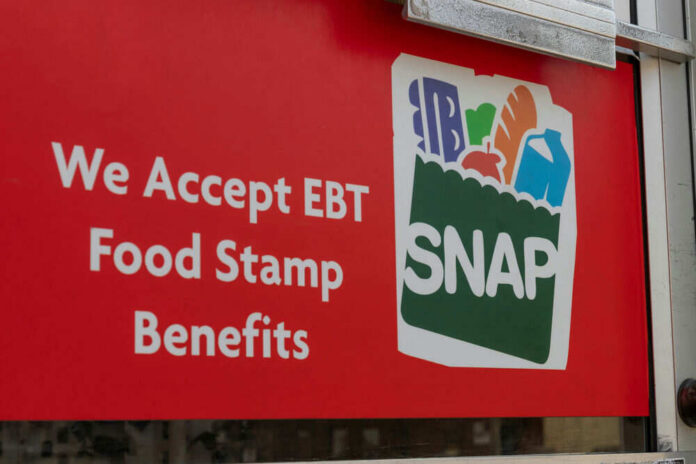
USDA’s proposal would end a paperwork shortcut and, by its count, reshape who gets food aid next year.
Story Snapshot
- USDA moves to narrow “categorical eligibility” to families actually receiving cash aid under Temporary Assistance for Needy Families (TANF).
- Agency projects 3.2 million households, or 6.3 million people, would lose Supplemental Nutrition Assistance Program (SNAP) benefits in 2029.
- Estimated federal savings total $44.649 billion over five years, fiscal years 2027–2031.
- The rule aims to align SNAP with federal income and asset limits and tighten integrity controls.
What the rule actually changes
USDA proposes to limit SNAP’s “categorical eligibility” to households that receive defined TANF assistance, not those touched only by noncash TANF-funded services like job referrals or pamphlets. Many states use broad-based categorical eligibility to ease paperwork and raise resource limits for working families. The rule would keep the statutory path through TANF, but close the noncash-service gateway. USDA says this channels aid to households that meet federal income and asset standards already on the books.
USDA’s regulatory impact analysis puts hard numbers on the shift. The department estimates that about 16.9 percent of SNAP households—3.2 million households including 6.3 million people—would no longer get benefits in fiscal year 2029 because their income or resources exceed federal limits. The agency also projects $44.649 billion less in federal benefit spending from 2027 through 2031. These are forecasts, not outcomes, but they reflect detailed caseload modeling that underpins the proposal.
Why this matters for families and states
States built broad-based categorical eligibility over decades to reduce red tape, shorten lines, and smooth benefit cliffs for low-wage workers. Rolling it back would mean more document checks, more asset tests, and tighter screening at every office window. USDA acknowledges some added workload and notes that effects could extend to linked school meal eligibility in certain states. Critics focus on the headline figure—6.3 million—and say that number signals real strain for households on the margin.
Supporters argue a simpler principle: Congress set income and asset limits for a reason, and policy should honor them. They see categorical eligibility through noncash services as a back door that blurs those lines. To that view, the rule restores targeting without killing the TANF-based shortcut that Congress authorized. That balance—tight targeting with basic administrative ease—is the stated aim: keep the lawful fast lane, close the loophole lane, and get dollars to the most eligible first.
The integrity argument and its limits
Program integrity is the third rail here. Some claims about deceased or duplicate recipients made big waves, but the underlying data have not been fully released for public review, which weakens that specific talking point and lets opponents call it a scare stat. The stronger case for the rule rests on the clear legal definition of TANF assistance and the agency’s modeling that shows many current recipients exceed federal income or resource thresholds under the state-expanded rules. That is a cleaner, verifiable frame.
🚨 Big news: The Trump administration is looking to shake things up with SNAP (you know, food stamps). This could affect more than 6.3 million people—roughly 18% of recipients—by cutting off automatic eligibility for families who rely on other aid like TANF.
Here’s what you… pic.twitter.com/EW7GxHx9CU
— Thomas Huffman (@ThomasHuffman79) November 12, 2026
Conservatives should press for two follow-through steps that match common-sense governance. First, demand an independent score check of the $44.649 billion estimate that includes state administrative costs and any spillovers to other aid programs. Second, insist on transparent release of the caseload model’s assumptions and state files so the public can see who is affected and why. If the reform is about fairness and focus, sunlight should only help its case.
How to judge the tradeoffs
Three questions should guide the verdict. One, does the rule faithfully apply federal income and asset limits, without gimmicks? USDA’s text and estimates say yes, by ending routes that do not involve actual TANF assistance. Two, can states handle the added verification without kicking off people who still qualify? USDA flags some burden, so oversight will matter. Three, does the five-year savings outweigh any higher churn or processing errors? That requires the independent review noted above—and rapid course correction if problems appear.
Sources:
fna.usda.gov, federalregister.gov