
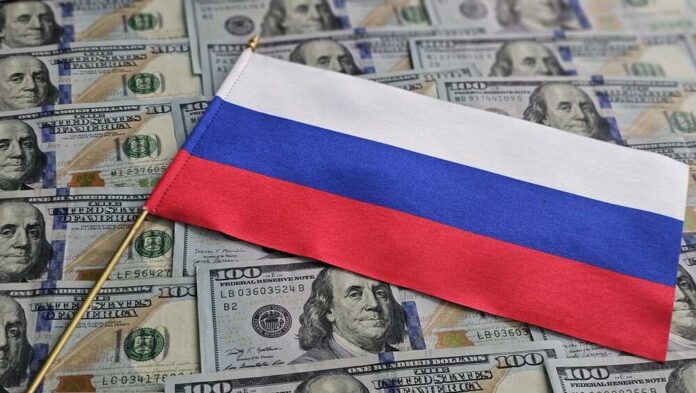
A Russian businessman with close ties to Vladimir Putin picked up the tab for a private island, fireworks, and two nights of parties tied to Donald Trump Jr.’s wedding, according to a new investigation.
Story Snapshot
- ProPublica reported Umar Kremlev, a Russian oligarch close to Putin, paid hundreds of thousands of dollars for wedding-related events for Donald Trump Jr. and Bettina Anderson.
- Reported costs include roughly $100,000 to rent a private island and $70,000 for a fireworks display, funded through a Dubai entity tied to Kremlev’s boxing organization.
- Anderson and Trump Jr. confirmed Kremlev paid for a post-wedding celebration, calling it a generous gift from a friend, not funding for the wedding itself.
- A House Democrat has already raised questions about the arrangement, while Kremlev’s camp insists the friendship carries no political dimension.
What ProPublica Found About The Payments
ProPublica reviewed financial records and spoke with three people close to the event. The outlet reported Kremlev “footed the bill for hundreds of thousands of dollars of wedding expenses,” including renting out a private island and covering a fireworks show.
The payments reportedly flowed through an entity linked to the International Boxing Association, the organization Kremlev leads, rather than as a simple personal check between friends.
The wedding itself took place in May on two private islands in the Bahamas, described as an intimate affair.
The Washington Post reported that some of the festivities surrounding that private celebration were paid for by a wealthy Russian who does business with the Russian state. That detail, more than the party itself, is what turned a family celebration into a national story.
How Trump Jr. And His Wife Responded
Bettina Anderson did not deny the payments. Instead, she framed them as an act of friendship. She wrote that Kremlev “very generously hosted two incredible nights of celebrations for us AFTER our wedding,” calling it “an extraordinarily generous wedding gift from a friend.”
She also pushed back hard on critics, writing that “friendship doesn’t require a political motive” and that “sometimes a wedding gift is simply a wedding gift”.
Donald Trump Jr.’s lavish wedding was heavily funded by a Russian oligarch with close ties to Vladimir Putin, according to a bombshell report.
https://t.co/xUupegKp5e— The Daily Beast (@thedailybeast) September 14, 2026
Trump Jr. offered his own account, calling the funded event “an afterparty” given in the couple’s honor and insisting it was “not a big deal”. His spokesperson confirmed Kremlev is “a personal friend of Don” and said the two do not have a business relationship.
Kremlev’s press office echoed that framing, saying the men have a “friendly relationship” that began “a couple of years ago” and that Kremlev has never discussed politics with his American acquaintances.
Why Foreign-Funded Gifts Draw Scrutiny
Democratic Representative Robert Garcia has already raised questions in Congress about who funded the celebration and why. That reaction fits a familiar pattern in Washington.
Foreign money and lavish hospitality toward a president’s family routinely raise alarms, even when no one can point to a specific favor traded in return.
Federal ethics rules exist because gifts create a sense of obligation, whether or not that obligation is ever cashed in. Senate ethics guidance specifically flags foreign-sourced gifts as a heightened risk category precisely for this reason.
The Foreign Gifts and Decorations Act requires disclosure of foreign gifts above a minimal value, a standard built on the idea that transparency, not trust, protects against undue influence.
None of that proves wrongdoing here. Trump Jr. is a private citizen, not a sitting official bound by the Emoluments Clause, and his family has been open that Kremlev is a longtime friend rather than a business partner.
Common sense says people are entitled to accept gifts from friends, foreign-born or not, without being accused of corruption absent real evidence of a deal. The burden should fall on critics to show an actual exchange, not just a foreign name attached to a bill.
What Remains Unclear About Kremlev’s Motives
Kremlev is a controversial figure well beyond this wedding. He heads the International Boxing Association, an organization that has drawn scrutiny over its finances and governance under his leadership.
That history adds weight to questions about why he chose to bankroll an American president’s son so generously, even if the answer turns out to be nothing more than personal friendship.
Anderson has asked the public to take that friendship at face value, arguing it’s “unfortunate” that something personal gets “recast as something political or sinister” because of who the giver is. Reporters and lawmakers, understandably, will keep asking questions anyway.
A closer relationship between a Kremlin-linked businessman and the president’s family is the kind of story that invites scrutiny, whether or not it ultimately reveals anything more than an expensive friendship.
🔴 Trump Jr.'s wife confirms Russian oligarch hosted post-wedding events
Bettina Anderson, wife of Donald Trump Jr., confirmed that a Russian oligarch with ties to President Vladimir Putin helped host some of their post-wedding festivities.
The source provides no additional… pic.twitter.com/pBpDOWtBVj— NewsTongue (@NewsTongueX) September 15, 2026
For now, the facts on record are these: Kremlev paid, the couple confirmed it, and both sides call it a gift between friends rather than a political transaction. Whether that explanation satisfies critics in Congress or the press will likely shape how this story develops in the weeks ahead.
Sources:
abcnews.com, usatoday.com, themoscowtimes.com, x.com, chosun.com, thehill.com, the-independent.com, reddit.com, news3lv.com, philanthropyroundtable.org, cnn.com, docs.house.gov