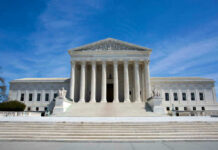

The Supreme Court’s quiet, one-line refusal to hear President Donald Trump’s appeal may be one of the most powerful sentences written about a president in our lifetime.
Story Snapshot
- A federal jury found Trump liable for sexually abusing and defaming writer E. Jean Carroll and awarded her $5 million.
- Higher courts studied the case, upheld the evidence, and left the verdict standing.
- The Supreme Court then refused to even hear Trump’s final appeal, ending the legal fight over the $5 million award.
- The case shows how defamation law now serves as the battlefield for sexual assault claims against powerful public figures.
How a decades old department store encounter turned into a landmark case
In the mid 1990s, E. Jean Carroll says she met Donald Trump in Bergdorf Goodman, a high end department store in Manhattan. She testified that what began as playful talk about trying on clothes turned dark in a dressing room, where Trump pinned her against a wall, kissed her, and forced his hand inside her, digitally penetrating her as she struggled.
There was no security video, no medical record, and no police report from that day. For years, the story lived only in her memory and, later, in her writing.[1][3][4]
Carroll finally sued Trump long after criminal charges were off the table due to time limits. Her path was civil, not criminal. A Manhattan federal jury heard her detailed testimony, Trump’s blanket denials, and evidence including his now famous 2005 Access Hollywood recording where he bragged about grabbing women without consent.
The jury did not find rape under New York’s narrow criminal definition, but it did find that Trump sexually abused her and forcibly touched her.[1][4][5]
What the jury actually decided and why it matters
The jurors concluded Trump was liable for sexual abuse and defamation tied to his 2022 social media post calling Carroll’s story a lie. They awarded her a total of $5 million, including money for the assault, harm to her reputation, and punitive damages meant to punish and deter.
Judge Lewis Kaplan later explained that, based on the jury’s findings, Trump had forcibly penetrated Carroll with his fingers, and that this met the common meaning of rape even if New York’s statute used a narrower term. That judicial clarification is key to understanding why many outlets now say flatly Trump “raped” Carroll.[1][2][4][5]
For those who care about both due process and clear language, the split is important. The jury, applying New York’s legal labels, did not check the box for “rape” under that statute.
The judge, interpreting what the jury clearly believed happened, said the act fits what everyday people mean when they use the word. The tension between technical law and common speech fuels today’s bitter argument over how to describe the verdict.[1][4][5]
President Donald Trump said he will continue fighting what he called a fake case after the Supreme Court declined to hear his appeal of a $5 million civil judgment in favor of writer E. Jean Carroll. https://t.co/rQYRblYY1y
— NEWSMAX (@NEWSMAX) June 29, 2026
How Trump’s appeal attacked the evidence and why every court rejected it
Trump did not attend the trial and did not testify, but his lawyers fought hard on paper. They argued the judge wrongly allowed two other women to testify about past alleged assaults and allowed the Access Hollywood tape into evidence, saying this painted Trump as a serial abuser instead of sticking to Carroll’s claim.
They said this “propensity” evidence violated federal rules because it encouraged jurors to think: “he did it before, so he probably did it again.”[1][4][5][6]
The United States Court of Appeals for the Second Circuit, a key federal appeals court, disagreed. It held that the evidence fit rules that let jurors see patterns in sexual assault cases and help them judge credibility. The court said the trial judge stayed within normal bounds of discretion and that any minor errors did not change the outcome.
In plain terms, the appeals judges did not buy the claim that the jury was whipped into bias by dramatic testimony. They saw a careful trial with strong support in the record.[5]
When the Supreme Court says nothing, that silence speaks loudly
After losing in the appeals court, Trump took his fight to the Supreme Court, asking it to review and gut the verdict. His petition again centered on evidence rules and claimed the lower court opened the door too wide to damaging stories and old recordings.
On June 29, 2026, the Supreme Court simply declined to hear the case, offering no written opinion, no explanation, and no dissent noted. That one line did not say Trump was guilty of a crime. It said the civil judgment stands and the legal path to overturn the $5 million verdict is closed.[3][6][10][11]
For a president, this is huge. The highest court in the land looked at the record, saw no broad constitutional issue worth its time, and let the jury’s view of the facts rule the day.
Why this case is now a blueprint for defamation fights over sexual assault
This was not only about what happened in a dressing room. The legal engine was defamation law. Carroll won as a public figure, which meant she had to prove Trump spoke with “actual malice” when he called her story false.
That standard requires showing he either knew his denial was false or spoke with reckless disregard for the truth. She cleared that high bar and walked away with a verdict that courts at every level refused to disturb.[5][14][15][16][17]
For victims whose assaults are too old for criminal charges, this case offers a map. Use civil law. Target the lies told about you. Force powerful men to defend their statements under oath and evidence.
From a common-sense view, this approach respects the rule of law while still demanding personal responsibility. Trump still calls it a “witch hunt.” But the jury, the trial judge, a federal appeals court, and now the Supreme Court have all effectively answered: the facts say otherwise.
Sources:
[1] Web – Supreme Court rejects Trump’s push to toss $5 million verdict in E. …
[2] Web – Jury finds Trump liable for sexual abuse, awards accuser $5M
[3] Web – Supreme Court Lets $5 Million Sex Abuse Verdict Against Trump …
[4] Web – E. Jean Carroll v. Donald J. Trump – Wikipedia
[5] Web – Judge clarifies: Yes, Trump was found to have raped E. Jean Carroll
[6] Web – CARROLL v. TRUMP (2023) – FindLaw Caselaw
[10] Web – RAINN’s National Sexual Assault Hotline
[11] Web – Trump’s final appeal of E Jean Carroll sex abuse case rejected – BBC
[14] Web – The Supreme Court declined to hear President Donald Trump’s …
[15] Web – Defamation – First Amendment Watch
[16] Web – Public Officials in Defamation Legal Claims – Justia
[17] Web – Defamation of a Public Figure vs. Private Figure