
President Donald Trump’s team just greenlit a $2.8 billion bomb package for Israel, and the numbers are staggering.
Story Snapshot
- The administration advanced a $2.8 billion munitions sale to Israel, including 2,000-pound bombs.
- The package centers on about 40,000 heavy bomb bodies, split between MK 84 and BLU-117 types.
- Officials moved the plan through Congress’s formal arms-sales notification system.
- The sale follows earlier emergency fast-tracks for Israel under U.S. law.
What the sale includes and why it matters
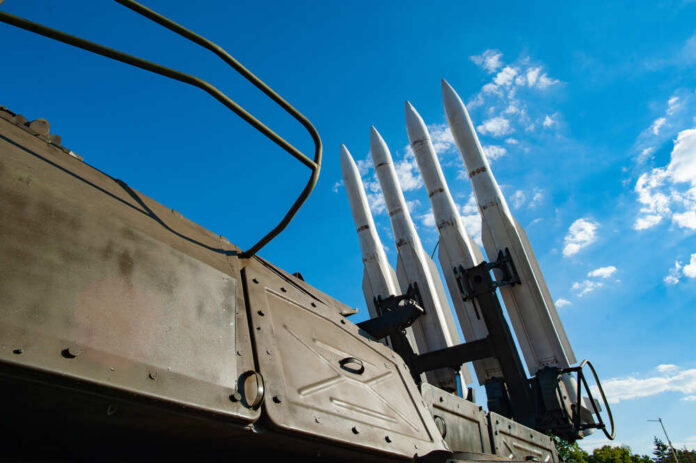
The White House advanced a munitions deal worth about $2.8 billion for Israel that features tens of thousands of 2,000-pound bombs, according to a U.S. official. This includes about 20,000 MK 84s and 20,000 BLU-117s, which are heavy general-purpose bomb bodies built to strike hardened targets.
The Washington Examiner reported the total as 40,000 one-ton bombs, aligning with that breakdown. This is among the largest single U.S. bomb packages for Israel in recent years, and it signals long-term resupply planning.
The Defense Department’s sales channel requires advance notice to Congress for major arms exports. The Arms Export Control Act sets a 30-day review period, though emergency authorities can shorten that timeline when the administration deems it necessary.
This package moved through those standard notifications, while past shipments in 2025 used emergency powers to expedite deliveries amid active conflict needs. The approach shows a dual-track playbook: notify when possible, accelerate when the clock matters most.
The Trump administration is preparing a $2.8 billion arms package for Israel, including several thousand 2,000-pound bombs, in what would be the largest single U.S. sale of the powerful munitions to Israel in recent years. https://t.co/ZSknqZIbEg
— NEWSMAX (@NEWSMAX) September 16, 2026
How this fits U.S. policy and Israel’s edge
U.S. law requires that Israel keep a “qualitative military edge” over regional threats. Congress expects regular certifications, and the executive branch often uses major sales to maintain that edge. Heavy bomb bodies fill backlogs, free up precision kits, and hedge against supply shocks.
The Congressional Research Service documents a long history of large Israel cases, frequent notifications, and periodic emergency waivers when speed outruns the calendar. The result is a reliable pipeline that blends oversight with flexibility.
Earlier this cycle, the administration invoked emergency powers to bypass the full review period and speed more than 20,000 bombs worth roughly $650 million, citing urgent operational needs.
The Defense Security Cooperation Agency also flagged a separate, possible $2.04 billion package for munitions and support in 2025, underscoring steady demand and multi-year planning. Together, these actions map a sustained resupply rhythm: immediate relief under emergency authorities and larger follow-on cases to rebuild stocks.
The numbers, the politics, and the ground truth
Reuters placed the new package at $2.8 billion, citing a U.S. official with direct knowledge, and detailed the split between MK 84 and BLU-117 bomb bodies. The Washington Examiner echoed the 40,000 count and framed it as a restart of items held up under the prior administration.
From a policy lens, the size stands out, but it tracks a broader pattern in which the Middle East and Israel receive a large share of U.S. sales under the Foreign Military Sales program, backed by law and sustained by industry capacity.
#RWorldNews
US Approves Bomb Sale to Israel Trump administration approves $2.8B arms package: 40,000 bombs for Israel, raising civilian casualty concerns. #Israel #USArmsDeal #MiddleEast pic.twitter.com/LgIUmtJAvt— Triple R (@RaviRRana) September 16, 2026
Supporters argue the sale stands on strategic clarity: arm an ally, deter enemies, and end wars faster by making force decisive. Critics point to humanitarian risks in dense urban battles, but the legal process, congressional notice, and the emphasis on Israel’s qualitative edge show the system working as designed, with elected leaders accountable for the tradeoffs.
Sources:
nbcnews.com, reuters.com, washingtonexaminer.com, ts2.tech, responsiblestatecraft.org, fdd.org, nytimes.com, congress.gov, revista.fateczl.edu.br, e-ir.info