
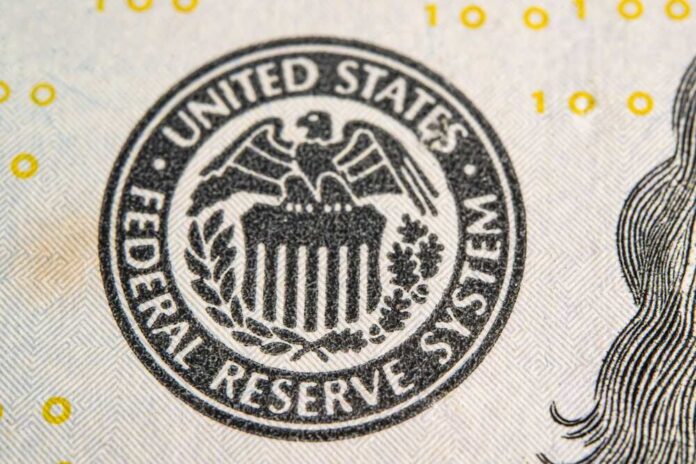
The Federal Reserve just held interest rates steady amid the most fractured vote in over three decades, exposing deep internal rifts that spell trouble for whoever takes the reins next.
Story Snapshot
- Federal Reserve maintained rates at 3.5%-3.75% on April 29, 2026, with an 8-4 vote—the most divided decision since October 1992
- Four dissents split in opposite directions: three regional presidents opposed hints of future rate cuts, while one governor pushed for immediate cuts
- The decision coincides with Jerome Powell’s final meeting as chair and surging oil prices above $100 per barrel driven by Middle East conflicts
- Incoming chair Kevin Warsh faces a fractured Fed as President Trump pressures the institution to cut rates despite inflation concerns
A Historic Split Reveals Deepening Fault Lines
The Federal Reserve’s April 29 decision to hold interest rates at 3.5%-3.75% would normally qualify as business-as-usual monetary policy. What made this meeting extraordinary was the internal rebellion it exposed. Four voting members dissented—matching the highest dissent count since October 6, 1992.
Even more telling, the dissenters split in opposite directions. Three regional Fed presidents wanted the central bank to stop hinting at future rate cuts, while Governor Stephen Miran advocated for cutting rates immediately. This wasn’t just disagreement; it was ideological warfare over the Fed’s fundamental direction.
Fed holds rates steady but with highest level of dissent since 1992 https://t.co/h4Ro1opaEm
— CNBC International (@CNBCi) April 29, 2026
Powell’s Swan Song and Trump’s Shadow
Jerome Powell presided over this contentious vote during what appears to be his final meeting as chair, with his term ending May 15, 2026. The timing couldn’t be more awkward for his presumptive successor, Kevin Warsh, who awaits Senate confirmation while navigating President Trump’s loud demands for looser monetary policy.
The dissenters included Beth Hammack from Cleveland, Neel Kashkari from Minneapolis, and Lorie Logan from Dallas—all regional presidents who supported holding rates but objected to language suggesting future cuts might come.
Their resistance signals growing regional bank opposition to the Board’s dovish inclinations, a power dynamic that will complicate Warsh’s leadership from day one.
Oil Shocks and Geopolitical Chaos Drive Inflation Fears
The Fed upgraded its inflation assessment from “somewhat elevated” to simply “elevated,” pointing explicitly to global energy prices and Middle East uncertainty. Oil has surged past $100 per barrel, fueled by the U.S.-backed conflict with Iran—a geopolitical factor directly constraining the Fed’s options.
The policy statement acknowledged “developments in the Middle East” create “a high level of uncertainty,” yet the committee retained language about “the extent and timing of additional adjustments” to rates.
That forward guidance proved too dovish for the three regional dissenters who fear signaling cuts prematurely while inflation remains stubbornly above target after five years of missing the Fed’s goals.
Fed holds rates steady but with highest level of dissent since 1992 @CNBC https://t.co/VFxIVnwrYI
— Stone Mountain Capital LTD 🇬🇧 (@stonemountainuk) April 30, 2026
Markets Price In Reality: No Relief Coming
Traders have already adjusted expectations, pricing in zero rate cuts for the remainder of 2026. This reflects market acknowledgment that the Fed’s dual mandate—controlling inflation while supporting employment—has tilted decisively toward the inflation fight. Borrowers hoping for relief from sustained high rates face continued pressure.
Energy-dependent sectors absorb volatility from $100-plus oil. The political dimension adds complexity: Trump’s growth agenda assumes lower rates to stimulate economic activity, but the Fed’s internal hawks see premature easing as risking a return to the persistent inflation that plagued the economy for half a decade.
What the Dissent Pattern Reveals About Fed Independence
Governor Stephen Miran’s dissent in favor of cutting rates stands out for its political optics. Miran joined the Fed from a Trump advisory role and has consistently advocated for looser policy since joining the Board.
His lone dovish voice against three hawkish regional presidents creates an uncomfortable narrative about external influence on supposedly independent monetary policy. The regional presidents, conversely, demonstrated institutional resistance to political pressure by opposing even hints of future easing.
Their dissent wasn’t about the rate hold itself—they agreed on keeping rates steady—but about protecting the Fed’s credibility on inflation control when geopolitical oil shocks threaten price stability.
Fed holds rates steady but with highest level of dissent since 1992 🤔 https://t.co/jw8CU0KtOd via @LinkedIn
— Anish Nanda (@anish_nanda) April 30, 2026
The Leadership Transition Couldn’t Come at a Worse Time
Kevin Warsh inherits a Federal Reserve divided not just on current policy but on fundamental philosophy about how aggressively to fight inflation versus support growth. The breadth of opinion he’ll face became painfully public in this vote.
Regional banks are asserting independence from Board guidance, Trump expects loyalty to his economic priorities, and inflation remains elevated with no clear path downward while oil prices spike. The 1992 precedent for this level of dissent came during a very different economic environment.
Today’s combination of geopolitical energy shocks, political pressure on Fed independence, and leadership transition creates challenges that straightforward monetary policy tools may struggle to address.
Common sense suggests the institution’s credibility depends on prioritizing its inflation mandate over political convenience, but achieving consensus on that principle just became significantly harder.
Sources:
Fed holds rates steady amid the most dissents in decades – Axios
Fed holds rates steady, but board vote is most divided since 1992 – Arizona Daily Star