

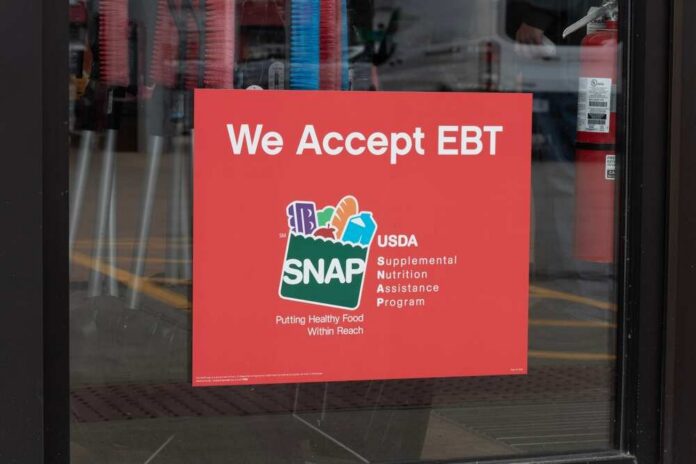
The clock on emergency SNAP funding runs out September 30, and the remaining rules are strict, clear, and already reshaping who gets help.
Story Snapshot
- Work rules are part of SNAP eligibility, and not following them can mean loss of benefits.
- Adults must meet an 80-hours-per-month standard to satisfy the time-limit work rule.
- USDA found a 10.62% payment error rate in 2025, triggering tougher state accountability.
- Congress set SNAP contingency funds to expire after September 30, 2026, raising urgency.
What changes now: firm rules, less cushion
United States Department of Agriculture policy spells out a simple gate: if you can work and do not follow the program’s work rules, you can lose Supplemental Nutrition Assistance Program benefits. That is not new, and it is not a rumor; it is on the agency’s own eligibility page.
The end of September matters because the special reserve money that has helped steady the program is time-limited. Congress wrote those contingency funds to be available only through September 30, 2026.
Adults subject to the time-limit rule face a measurable hurdle. The United States Department of Agriculture defines compliance as working at least 80 hours a month, joining a qualifying program for 80 hours, or mixing the two to reach 80 hours.
If someone falls short, federal law and state procedures can impose sanctions. That standard isn’t hidden in fine print. It is the cornerstone of how the time limit works and why case outcomes can shift fast.
Why the numbers push enforcement
The United States Department of Agriculture reported a national payment error rate of 10.62% for fiscal year 2025. Congress set a 6% line for stronger action. States at or above that line must help pay a share of benefits and file a corrective plan, according to the agency’s June release.
That design puts real money on accuracy. It also pressures state agencies to verify work status, track hours, and clear backlogs with fewer mistakes.
Nationwide, about 5 million Americans have lost access to SNAP benefits since the One Big Beautiful Bill became law, according to the Center on Budget and Policy Priorities, and SNAP funding could face a major shake-up at the end of September.
Read more: https://t.co/ZpcLLWR3Ld pic.twitter.com/YogSU7nf6X
— ABC News (@ABC) September 14, 2026
The One Big Beautiful Bill Act of 2025 locked in this approach as formal federal policy. The agency’s implementation page includes a section on work requirements and the exceptions memo, which signals this is not a pilot or a press-release whim.
It is a standing package the United States Department of Agriculture must execute, and states must administer. Starting in fiscal year 2028, the policy will even shift some benefit costs to states based on their payment error rate, which deepens the incentive to get eligibility right.
September’s pinch point: money, mechanics, and messaging
Congress set the Supplemental Nutrition Assistance Program contingency funds to lapse after September 30, 2026. That language matters because it removes a buffer that helped smooth shocks and keep benefits flowing during budget fights.
When the cushion fades, operations lean harder on the base rules and the accuracy system now in place. Senate discussions have included proposals to delay pieces of this cost-shift architecture, but the core federal rules on work and accuracy already exist and are moving.
This won’t save money.
It will cost more.
They will Raise state funding
A state legislature will allocate additional money to keep SNAP operating at current levels despite reduced federal support. That might mean higher taxes, spending cuts elsewhere, or using budget…
— Robert Welch II (@WelchRobII) September 13, 2026
Advocacy groups claim millions already lost benefits under the newer rules and broader law changes. Those claims reflect real pain in local stories and are part of a live political fight. But the federal record is clearest on two points: work rules are central to eligibility, and states must answer for high error rates.
How states can reduce the whiplash
Clear notices, working phone lines, and quick appeals decide whether rules feel fair. States should front-load reminders on the 80-hour standard, list the simplest ways to meet it, and give a checklist for proof.
Agencies with high error rates should target the exact failure points that drive mistakes, not flood every case with new paperwork. That is how to cut bad payments without cutting off eligible families. It also meets the federal push on accuracy while honoring the program’s mission.
What families can do before the deadline
People who may be subject to the time limit should document hours weekly, keep pay stubs in one place, and ask their caseworker to confirm whether their county or status qualifies for an exception. Those in approved training or education should get written proof of hours.
Households should sign up for text or email alerts and call to confirm recertification dates. The stakes rise after September because the reserve money fades, and small errors can snowball into missed months.
Bottom line: steady rules, shrinking slack
September does not rewrite Supplemental Nutrition Assistance Program law. It removes a cushion and sharpens focus on existing rules.
The United States Department of Agriculture says you must meet work requirements to qualify, and it is holding states to account when too many payments miss the mark. That is the play now.
If Congress changes the timeline, that is politics. If households prepare and states fix known errors, that is progress the program can defend.
Sources:
abcnews.com, fna.usda.gov, newsweek.com, ers.usda.gov, congress.gov