

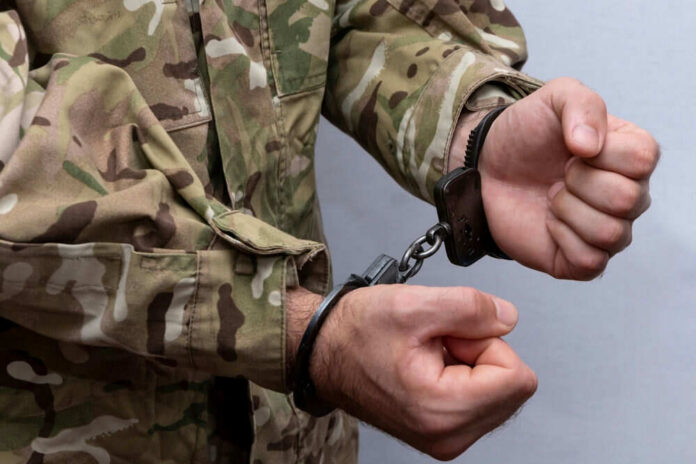
British counterterrorism police arrested a 41-year-old U.S. Army member near Gloucester on suspicion of aiding Russia under the United Kingdom’s new national security law.
Story Snapshot
- UK officers made a formal arrest under the National Security Act 2023, citing links to Russia.
- Sections 1 and 3 cover obtaining protected information and helping a foreign intelligence service.
- Searches at two Gloucestershire locations followed; the suspect is held in London.
- U.S. authorities, including the Federal Bureau of Investigation (FBI), are working the case with the UK.
Arrest, Alleged Russia Link, And What The Law Targets
Counter Terrorism Policing in the UK announced the arrest on November 10, 2026. The force said the case concerns suspected offenses under Sections 1 and 3 of the National Security Act 2023 and that the allegations relate to Russia. Those provisions address obtaining or sharing protected information and assisting a foreign intelligence service. The arrest took place near Gloucester, and officials confirmed linked searches at two sites in Gloucestershire. The suspect remains in custody at a London police station.
U.S. authorities publicly backed the probe. The Federal Bureau of Investigation director called the matter an espionage allegation of top concern to the United States and its allies, underscoring a joint effort between British police, the FBI, and U.S. military elements. Major outlets reported consistent core facts: the soldier’s age, the Russia nexus, and the grounds for arrest under the new law. Officials have not released the name. One sentence of caution: an arrest on suspicion is not a conviction.
How The UK’s New Law Changes The Spy Playbook
The United Kingdom wrote the National Security Act 2023 to hit more than classic spy tradecraft. It covers help to hostile services, sabotage, and influence work that can damage national security even if no top-secret file changes hands. Prosecutors have already used the law in Russia-related cases, including a sabotage plot against Ukrainian-aid warehouses on British soil, which led to convictions and prison time. These cases show a pivot from only catching handlers to catching helpers on the ground.
That wider net matters here. A Section 3 arrest can involve many acts that enable an intelligence service, like scouting, logistics, payments, or recruitment support. It does not require a successful handoff of classified documents to be serious. When police cite both Sections 1 and 3, they signal concern about protected information and help to a foreign service in the same probe. That mix often points to collection attempts or early-stage compromise, which security services aim to disrupt before damage spreads.
Why A US Soldier In The UK Raises The Stakes
A U.S. Army member operating in the United Kingdom sits inside a tight defense ecosystem: Britain and the United States share bases, training lanes, and steady information flows. Even low-level access can expose patterns, schedules, or system details that adversaries can stitch together. That is why allied services move fast when a uniformed insider appears in their threat stream. The joint UK-U.S. response here shows the standard: act early, lock down risk, and then work the evidence.
Conservative common sense says allies must protect secrets, back the cops, and let due process run. The public does not need every file to support a decisive early arrest. National security operates on prevention, not courtroom drama. When investigators can lawfully disrupt a suspected link to Russia’s services, they should do it, then prove the case. That is the right balance of strength and fairness in a dangerous world.
What Comes Next In A Cross-Border Espionage Probe
Investigators will map the suspect’s network, devices, and data trail. They will build a timeline and test links to any Russian entity. Forensics on phones and computers often drive these cases, supported by travel, finance, and communications records. Prosecutors will then decide whether to bring formal charges under the National Security Act. If they file, the court will test whether the evidence meets the bar for obtaining or handling protected information and assisting a foreign intelligence service.
A senior US Army soldier has been arrested in Britain over alleged Russia-linked espionage offences, with UK and US authorities jointly investigating the case. https://t.co/ZFejTpFECD
— Inter Bellum News (@InterBellumNews) November 11, 2026
This case will also track with a wider British shift to harden the operating space against state-backed activity, including measures that single out Russia’s networks and cut their room to maneuver. The allied posture is simple: close the gaps, catch facilitators early, and keep shared defenses tight. That approach honors the duty to protect troops, technology, and the public. It also signals to Moscow that helpers face real risk, whether they wear a uniform or not.
Sources:
reuters.com, bbc.com, army.mil, uk.news.yahoo.com, stripes.com, therecord.media