

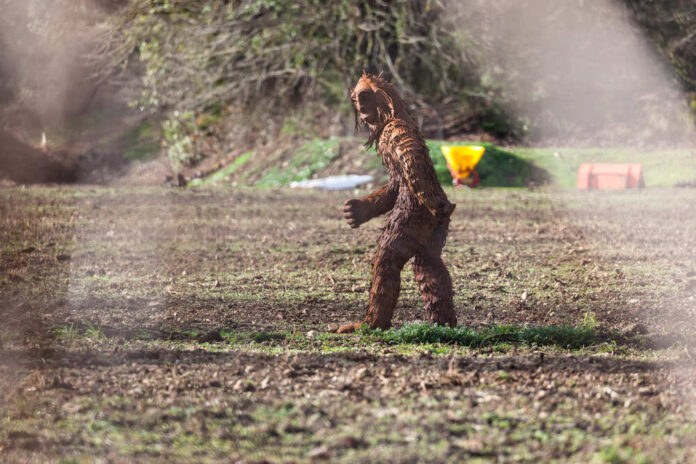
The federal government just confirmed, in its own paperwork, that Forest Service rangers once spent real time chasing Bigfoot tracks through a Pacific Northwest watershed.
Quick Take
- The USDA Forest Service posted a batch of Bigfoot and Sasquatch records in its public Freedom of Information Act reading room, dated October 15, 2026.
- One file is a June 18, 1982 memo from the Umatilla National Forest documenting a field investigation into alleged Bigfoot tracks near the Mill Creek Watershed in Washington state.
- The investigator who examined the prints concluded they were not made by a two-legged creature weighing more than 300 pounds.
- Decades of Bigfoot belief have never produced a verified body, bone, or reproducible DNA sample from an unknown species.
What The Newly Released Files Actually Show
The Forest Service’s Freedom of Information Act reading room now lists a collection titled “Bigfoot/Sasquatch Records,” posted October 15, 2026. It includes at least three files, among them a document named “June 18 1982 Bigfoot Tracks Investigation Umatilla NF.pdf.” This is not a leak or a rumor. It is an agency releasing its own historical paperwork through the normal public records process.
The centerpiece document is a memo, numbered 2600 Wildlife, sent from the Umatilla National Forest office in Pendleton, Oregon. Dated June 18, 1982, it documents an “Investigation into Sighting of Bigfoot Tracks in the Mill Creek Watershed.” Forest Service staff treated the report seriously enough to visit the site, examine prints, and write up a formal record for the agency’s files.
According to the case record, investigators collected multiple prints and made plaster casts during their field assessment. The person who examined the evidence concluded that at least the main set of tracks was not made by a bipedal creature weighing over 300 pounds. In plain terms, the government’s own 1982 investigator found no proof of a giant, two-legged animal roaming the forest that week.
A Decades-Old Mystery, Not A New Discovery
This release matters as a window into how a federal land agency once handled an unusual public report, not as new scientific proof that Bigfoot exists. The Forest Service was doing its job in 1982: a report came in, rangers checked it out, and they wrote down what they found. More than forty years later, that paperwork is public because the records process says it should be.
The broader Bigfoot story has followed the same pattern for more than sixty years. Believers point to tracks, blurry film, and eyewitness accounts. Scientists point to the total absence of a body, a skeleton, or a verified bone fragment from any accredited institution. No Bigfoot remains have ever cleared that bar.
Why The Evidence Keeps Falling Short
Genetic testing has tried to settle the question more than once. In a 2014 study, Oxford geneticist Bryan Sykes analyzed hair samples submitted from around the world as Bigfoot, Yeti, or Almasty evidence. Every single North American sample matched a known animal, including black bears, brown bears, raccoons, and horses. None pointed to an unidentified primate.
Researchers studying the Bigfoot phenomenon note that the underlying claim is hard to disprove through casual observation, since tracks and sightings can always be explained as something people didn’t examine closely enough. But that same claim has never produced the kind of evidence that normally establishes a real, breeding animal population in the wild.
TRUMP ADMINISTRATION QUIETLY RELEASES GOVERNMENT BIGFOOT / SASQUATCH FILES
Well, this wasn’t on my 2026 bingo card!
On October 15, the U.S. Forest Service quietly published three historical government files documenting alleged Bigfoot encounters and investigations dating back… pic.twitter.com/TuU8R4ThlA
— Paul White Gold Eagle (@PaulGoldEagle) November 23, 2026
Other files in the newly released collection reportedly cover additional cases tied to Montana and Oregon, including an account involving a missing elk carcass and mysterious tracks in snow that investigators later suspected were a hoax. Taken together, the records read less like proof of a hidden species and more like a decades-long paper trail of public curiosity that government employees were required to document and file away.
For readers who grew up on grainy Bigfoot footage and campfire stories, this release is a genuinely fun piece of Americana. The Forest Service didn’t dismiss the 1982 report out of hand, and it didn’t hide the file either. It investigated, wrote down what it found, and eventually let the public see it. That is exactly how government records are supposed to work.
Sources:
foxnews.com, fs.usda.gov, morbidindex.com, mcgill.ca, wikiwand.com