

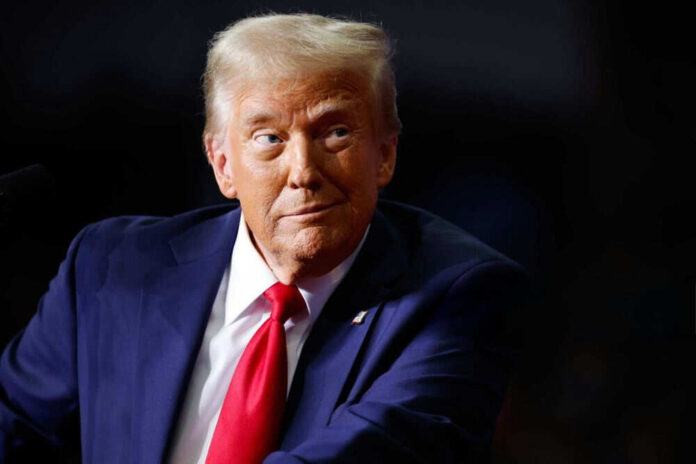
The dismissal of a war powers resolution has solidified President Trump’s influence over the GOP.
Story Highlights
- Vice President J.D. Vance cast the tie-breaking vote to dismiss the resolution.
- Senators Hawley and Young reversed their positions after assurances of no ground troops.
- The resolution aimed to limit Trump’s military actions in Venezuela.
- Trump’s sway over Republican senators remains strong amid Venezuela policy concerns.
Key Senate Vote Blocks Resolution
On January 14, 2026, Vice President J.D. Vance cast the decisive vote to dismiss S.J.Res. 98, a resolution that sought to restrict President Trump’s military actions in Venezuela. The Senate vote ended in a 50-50 tie, which Vance broke in favor of dismissal. This outcome underscores Trump’s continued influence within the GOP and the controversial nature of his Venezuela policy.
Senators Josh Hawley and Todd Young initially supported the resolution, expressing concerns about potential military escalation reminiscent of past conflicts.
However, both senators reversed their stance after receiving assurances from Secretary of State Marco Rubio that there would be no deployment of U.S. ground troops to Venezuela. These assurances were pivotal in swaying their votes, highlighting the power dynamics within the Republican party and the importance of maintaining unity.
Background on the War Powers Resolution
The War Powers Resolution of 1973 was enacted to check the executive’s military authority, requiring congressional approval for extended military engagements.
This legislation, established during the Vietnam era, remains a critical tool for ensuring that the president consults Congress before committing U.S. forces to prolonged hostilities. In recent years, debates have intensified over its application, particularly in response to Trump’s actions in Venezuela.
The recent capture of Nicolás Maduro and his wife in Caracas on January 3, 2026, under U.S. narco-terrorism charges, fueled the urgency behind the resolution. The Trump administration justified the operation as a necessary law enforcement action against cartels, invoking anti-terrorism powers.
However, concerns about escalating military involvement and the potential for oil interests have kept the issue at the forefront of political discussions.
Vance breaks Senate tie, votes to block Venezuela war powers resolution https://t.co/6fNEl9HXyR
— CNBC (@CNBC) January 14, 2026
Implications of the Senate Decision
The resolution’s dismissal preserves President Trump’s operational flexibility in Venezuela, allowing him to continue his aggressive policy without immediate congressional constraints. In the short term, this decision averts the risk of a congressional veto override.
Over the long term, it reinforces the executive branch’s dominance in foreign policy decisions, highlighting ongoing challenges in enforcing the War Powers Resolution.
The failure to pass the resolution has significant implications for both U.S. and Venezuelan stakeholders. For Venezuela, the political landscape remains uncertain in the wake of Maduro’s capture.
In the United States, GOP senators are faced with balancing loyalty to President Trump with skepticism about potential military entanglements. This scenario also raises questions about the extent to which the executive branch can act unilaterally on the global stage.
Sources:
Hawley Reverses Course on Venezuela War Powers Resolution After Rubio Assures No Ground Troops
Does the War Powers Resolution Apply to Military Actions Taken in Venezuela?
Venezuela War Powers Resolution Fails Senate; 2 Republicans Bow to Trump Pressure