
In less than a week, SpaceX went public, rocketed past Amazon, briefly edged Microsoft, and still only makes about one-fortieth of Amazon’s revenue.
Story Snapshot
- SpaceX’s market value blasted past Amazon and briefly Microsoft within days of its IPO.
- The company is worth around $2.6–$2.9 trillion on less than $19 billion in annual sales.
- Elon Musk says SpaceX “might” hit $1 trillion in revenue by 2030, far above Wall Street.
- The gap between story and math raises sharp questions about risk, hype, and basic investing discipline.
SpaceX vaulted past Amazon with a fraction of the sales
SpaceX floated shares on Friday and almost immediately turned into a market rocket. By Tuesday, the stock had climbed roughly 60% above its $135 offering price, giving the company a market value in the neighborhood of $2.6 to $2.9 trillion, depending on the time of day.
That surge pushed SpaceX past Amazon in market value and, for part of the session, even nudged it ahead of Microsoft, making it, for a moment, the fourth-largest United States company by market capitalization.[1][2]
🔥 JUST IN: SpaceX overtakes Microsoft to become the world's fourth most valuable company by market cap. pic.twitter.com/IPvjXrQOKy
— Cointelegraph (@Cointelegraph) June 16, 2026
That leaderboard shuffle would be less shocking if SpaceX’s business looked anything like those giants. It does not. SpaceX reported about $18.7 billion in revenue last year and almost $5 billion in losses.
Amazon, by contrast, produced roughly $717 billion in sales and over $77 billion in profit over the same period.[3][8] In plain English, the market now values a money-losing rocket-and-AI company as much as, or more than, a mature, cash-gushing retail and cloud empire.
Musk’s trillion-dollar promise collides with simple arithmetic
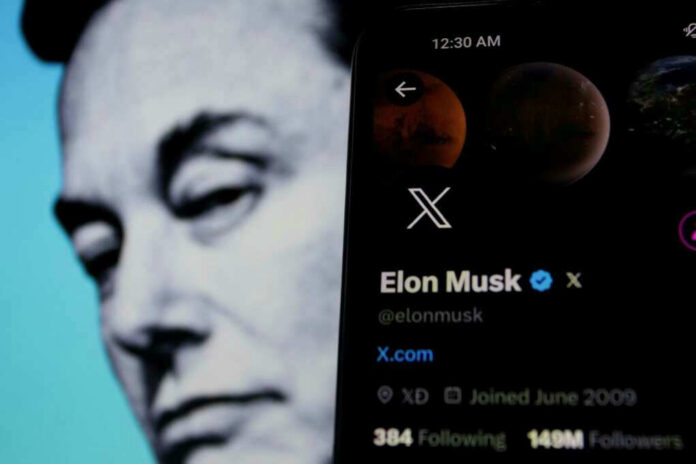
Elon Musk poured fuel on the fire by jumping on X to say SpaceX “might be able to reach approximately” $1 trillion in revenue in 2030 and that he would be surprised if revenue did not exceed that level by 2031.[2][19]
That number is not a small stretch above the bankers’ models. It is more like a new planet. Internal estimates shared with investors by Morgan Stanley put 2030 revenue near $330 billion, while Goldman Sachs pegged it around $470 billion, with the most aggressive forecasts still at less than half of Musk’s headline figure.[18][19]
Start from today’s audited base and the climb looks even steeper. The company’s prospectus and follow-up coverage show 2025 revenue of about $18.7 billion, up a solid 33%, but still paired with a net loss near $4.9 billion.[9][13][15]
To go from under $20 billion to $1 trillion in about five years would require growth that modern capitalism has basically never seen. Some analysts argue it would mean rapidly standing up three new industries at once: global satellite broadband, mass-market space services, and hyperscale artificial intelligence infrastructure.[18][22]
The IPO, the AI story, and the new bubble test
This run-up is not happening in a vacuum. SpaceX’s initial public offering raised on the order of $75–85 billion and immediately valued the business at more than $2 trillion.[4][18]
That cash is supposed to fund a long list of big bets, including more launch capacity, bigger satellite constellations, and a huge push into artificial intelligence computing. The company just agreed to buy Cursor, a fast-growing coding assistant, for around $60 billion, a move framed as cementing its place in the enterprise AI race.[5][9]
Bulls say this is exactly how American innovation should work. Public markets give a visionary founder huge capital up front, and he uses it to build infrastructure critics cannot even picture yet.
They point to Nvidia’s rise as proof that big leaps sometimes pay off. But investors remember the dot-com bust and the clean energy bubbles, where lofty stories floated for years while profits never arrived. Valuation built on narrative instead of cash flow tends to end the same way: late buyers hold the bag.
Control, concentration, and what discipline would ask
On governance, SpaceX looks less like a normal blue-chip and more like a Musk fiefdom. Filings reviewed by state officials show he is expected to retain close to four-fifths of the voting power with less than half of the equity, thanks to super-voting shares, while serving as chief executive, chief technology officer, and board chair at the same time.[12]
That structure may let him move fast, but it also means outside shareholders have almost no practical check on risk-taking.
SpaceX Passes Amazon in Market Cap on Day Three of Trading, Briefly Touches $3 Trillion Intraday
Since listing on the Nasdaq at $135 per share last Friday, SpaceX shares have climbed more than 50% and closed Tuesday at $201.https://t.co/KItee7fZ2f#UnbiasedHeadlines #News pic.twitter.com/WwxK5R8vA4
— Unbiased Headlines (@UnbiasedHdlns) June 17, 2026
For investors who care about common sense and accountability, a few questions rise above the noise. First, does paying over $2.5 trillion for a company with under $20 billion in sales and heavy losses make sense without a clear, auditable path to profit?
Second, should anyone treat a trillion-dollar revenue tweet as a base case when even deal bankers modeling the upside come in at roughly one-third to one-half of that number?[18][19] And third, if the story fails, who actually bears the cost — the founder, or the retirement savers pulled in by the spectacle?
Sources:
[1] Web – SpaceX rises 4% to leapfrog Amazon in market cap, closes short of …
[2] Web – Elon Musk Bets SpaceX Will Hit $1 Trillion In Revenue By 2030 …
[3] Web – Elon Musk says SpaceX revenue may hit $1 trillion by 2030, far …
[4] Web – Elon Musk forecasts a trillion-dollar revenue for SpaceX by 2030
[5] Web – Musk says SpaceX could bring $1 trillion in revenue by 2030 – Reuters
[8] Web – Elon Musk Reacts To $330 Billion SpaceX Projected Revenue …
[9] Web – Elon Musk makes sky-high trillion-dollar forecast for SpaceX revenue
[12] Web – SpaceX completes IPO at $135, prices 638.9M shares | SPCX 8-K …
[13] Web – Space Exploration Technologies – S-1 – SEC.gov
[15] Web – SpaceX Fires Starting Gun on Its Blockbuster IPO – WSJ
[18] Web – [PDF] Space Exploration Technologies – S-1/A#2 – Fidelity Investments
[19] Web – SpaceX financial statements visualized (income, balance sheet …
[22] Web – SPCX Stock Jumps Overnight After Stellar Debut: Musk Predicts $1 …