

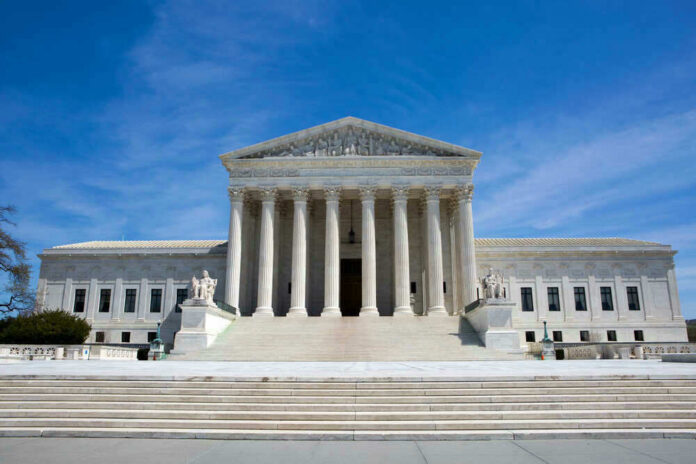
Chief Justice John Roberts kept hammers swinging on President Trump’s $400 million White House ballroom, and now the real fight begins.
Story Snapshot
- Roberts allowed construction to continue during the Supreme Court’s emergency review.
- The Trump administration says it can proceed without Congress during appeals.
- Lower courts said only Congress can authorize the project; appeals court agreed.
- Senate Republicans advanced a bill to fund and authorize the build.
What Roberts’ Move Actually Means
Chief Justice Roberts granted a temporary pause on the lower court stop order, which keeps construction active while the Supreme Court weighs an emergency request from the administration. That is not a final ruling on the merits. It signals that the administration’s arguments are strong enough for urgent review.
The White House framed the project as a security upgrade with a large-capacity space and hardened features. The National Trust for Historic Preservation says the law still requires Congress to bless it first.
Supreme Court chief justice allows work on Trump’s $400M White House ballroom to continue for nowhttps://t.co/4HBmPx7mKM
— Phil Stripling (@civex) August 21, 2026
The administration asked the Supreme Court to let work continue while appeals play out. The request follows rulings from a federal judge and the appeals court in Washington, which said the president cannot build the ballroom without congressional approval.
The appeals panel stressed that the Constitution gives Congress control over federal property, and the White House is federal property. The panel wrote that this type of major change is not “Executive self-help.”
The Legal Stakes Around the People’s House
Two big legal tracks now run in parallel. First, the emergency track: whether construction can proceed during litigation. That is today’s battlefield. Second, the merits track: who has final say over large, structural White House changes. Recent rulings backed Congress’ power and pressed pause on unilateral action.
The National Trust argues the East Wing demolition and new ballroom broke the rules because the administration skipped express authorization and required public review. If the Supreme Court takes the full case, that core question lands front and center.
Congress may decide this sooner than the courts. Senate Republicans introduced legislation to fund and authorize the project, placing $400 million behind it. That bill would supply the legal footing the courts say is missing.
If it passes, the courtroom math changes overnight. Until then, the appeals court’s message is plain: presidents are tenants, not owners, when it comes to the building’s bones.
Security, History, and the Optics War
The White House called the ballroom a security asset. Backers describe a protected gathering space, better ingress and egress, and modern infrastructure. Supporters argue that after recent threats, a hardened venue on the grounds is common sense. The National Trust says process matters as much as purpose.
The group does not deny the need for space but says it must happen lawfully, with Congress involved and public review completed. That stance aligns with how major federal property changes usually move: Congress first, bulldozers second.
The clean solution respects all three: get Congress on record, protect the presidency, and preserve the White House’s character. The push for legislation reflects that route.
If Congress acts, the security case gets sturdier and the preservation fight narrows to design and oversight. If Congress stalls, the administration must win a rare theory of unilateral power, which recent rulings have not favored.
What To Watch Next
Watch the Supreme Court’s timing. If Roberts refers the emergency application to the full Court and the Court denies relief, construction likely stops again while merits proceed. If the Court grants broader relief, work continues and the legal window stays open.
Track the Senate bill’s text and progress, including any language that ties funding to specific security features or oversight rules. Clear appropriations and authorization would undercut the courtroom blockade and settle the power question for this project.
Also watch how agencies handle review. The National Trust pressed for standard planning steps, including input from key federal design bodies and the public. Compliance there lowers legal risk even if Congress ultimately authorizes the build.
Bottom line for those who prefer clarity over drama: Roberts kept the lights on for now, the administration made its play, the lower courts drew a hard line for Congress, and Senate Republicans are moving to supply exactly that.
Sources:
apnews.com, bbc.com, reuters.com, congress.gov, pbs.org, washingtonpost.com, cbsnews.com